FYI

Don't forget to refer to my Contents page for a more convenient reference to past articles.

For More L.A. La Land, visit my writing/art/film appreciation site on Facebook at Quoth the Maven and follow me on Twitter @ Blahlaland. :)

Showing posts with label DW Griffith. Show all posts

Thursday, March 20, 2014

THE REEL REALS: Constance Talmadge


Constance "Dutch" Talmadge

The Talmadge sisters were three: Norma the glamorous, Natalie the silent, and Connie the clown. Constance Talmadge was one of silent cinema's original firecrackers. Unlike the elegantly postured Norma or the shy and depressive Natalie, Constance-- nicknamed "Dutch"-- was a buoyant woman of energy and fun. Raised to be assertive and strong-- all the Talmadge women learned to fend for themselves when their alcoholic father abandoned them-- Connie embraced the absurdity and harsh realities of life and combatted them with her humor and independent spirit. Embarking on a career in cinema almost as a gag-- "Well, why the Hell not?"-- she may not have taken the craft as seriously as the more ambitious Norma, but she possessed an even more charismatic presence that would draw contemporary audiences to the flame of her warmth and vivacity.

Constance was a staple in what would be known today as the Romantic Comedy wherein she naturally transitioned her bright personality to that of the hammy but attractive buffoon, perhaps not going as far as fellow comedienne Mabel Normand but packing her emotional sentiment with an equal blend of hilarity. Her most recognizable role remains that of the Mountain girl in D.W. Griffith's Intolerance, but she performed as the leading lady in many popular films of the time including both shorts and features: Her Night of Romance, The Love Expert, A Pair of Silk Stockings, etc. When the talkies intruded on the family profession, the sisters opted to bow out, probably predicting that their Brooklyn accents wouldn't translate well into sound. Constance had no regrets and let bygones be bygones.

Constance's private life unfortunately dwindled in her late years. Once wooed by Irving Thalberg, Connie's need for personal liberty was not easy to be contained. She was married four times and her high-living ways-- her hopes of outrunning the past and making the best of things-- caught up with her when she became dependent on alcohol. Still, the tough old bird made it to the 1970s before her candle was finally snuffed out. Though nowhere near as popular as she was in her own day, her goofy, honest, and infectious performances inspired future funny females whose work allows her own to live on. Remnants of her own contributions can still be found in the blessed modern world of DVD and live streaming, where she continues to encourage her audiences to laugh it up. What else have ya' got in the end?

Tuesday, December 4, 2012

STAR OF THE MONTH: Charlie Chaplin


Charles Spencer Chaplin

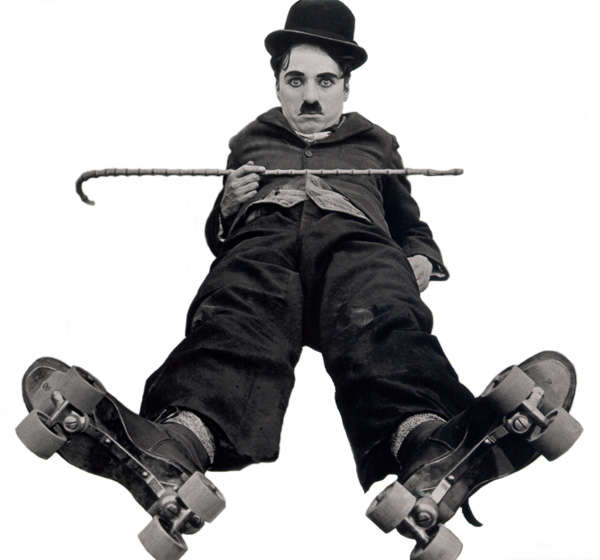
The spectrum of artists who built Hollywood is so wide and vividly populated that it is hard to generalize or define its true founders. The different talents and innovators who crafted the grandest level of artistic achievement-- a consummation of all artistry-- are incalculable. They wear many faces and many hats, some of which the audience never saw. However, when you whittle it all down, it isn't too extreme a statement to make that in the beginning, there were three. If Griffith gave the movies art, and Pickford gave it a face, then it was Chaplinwho gave it it's most useful and universal ingredient: heart. Marilyn Monroe once said, "If you can make a girl laugh, you can make her do anything." And so it was that Cinema's chief clown was able to endear himself to a worldwide audience and win their loyalty by giving them that oft sought and too little found human emotion: joy. But there was more to Charlie than his familiar "little tramp" schtick, for he too had art, and he too had a face-- one which has outlasted Mary's in its relevance. His comedy outdid Fatty Arbuckle's  because, while he portrayed down-and-out and sometimes manic characters, he was yet a buffoon with an edge of class. He was conscious while innocent, as calculating in his movements as he was in his story structure. His films too thematically outdo Buster Keaton's, making him the unexpected silent voice of reason, compassion, and human understanding. Buster awed his audience with surprising gags and awe-inspiring stunts; but Chaplin used his creativity just as concentratedly to make people feel as to astound them. And this, he did accidentally. He didn't set out to take the world by storm, nor to become the greatest fighter the underdog ever had. That's just how life played out. Then, just as quickly, the world that he had brought to its feet in applause turned its back on him. Life is funny...

~     ~     ~

Charlie Chaplin started out as many folks do who learn to use laughter to overcome their personal pains. He entered the world on April 16, 1889 in London to parents Charles Chaplin, Sr. and Hannah Hill.  He had an elder brother, Sydney-- a "bastard" from one of Hannah's earlier trysts-- and after his parents' marriage hit the rocks, he would be gifted another illegitimate brother, Wheeler, from whom he was parted and would not see for many years. He was, thus, his mother's only "legitimate" child. This made life no easier for him, and he never saw any difference between himself and the elder brother he adored. The family was impoverished, with Hannah earning money intermittently as an entertainer and a seamstress and Charles Sr. rarely pitching in while he enjoyed a measure of success as a singer. Charlie found himself growing up quickly, sharing the responsibilities of running the household with his equally responsible elder brother Sydney. Hannah, in Charlie's memory, was a wonderful woman: loving, tender, and talented. An uncanny mimic who put on shows for her two boys, telling them stories of the different townspeople she saw passing below their window, Hannah would give Charlie an early education in characterization. Sadly, she too was losing her mind, which was a part of her family's unfortunate legacy. Luckily, none of her sons seemed to inherit the gene that mentally crippled her. When times got rough, Charlie and Sydney found themselves shipped off to a workhouse and the London District Poor Law School of Hanwell, where Charlie received little more than a bout of ringworm and the pain of isolation from his loved ones. After Sydney decided to go to sea as a steward and bandsman (he played the bugle), dutifully sending money home to his family, Charlie became his mother's official caretaker. He took odd jobs selling flowers or working as a barber's boy to help supplement income. One night, he came home to the news that his mother had "gone insane." At the age of 13, he was forced to walk her himself to the infirmary where she was to remain for some time. The moment of goodbye was one he would not soon forget.


A young Charlie as Billy the Pageboy in "Sherlock Holmes."

The odds seemed stacked against him, but Charlie had a few things going for him. One was his drive; the other was his natural talent. He and Sydney both shared a love of performing. Charlie once said that his love of music, and thusly his love of entertainment, was born when he heard the song, "The Honeysuckle and the Bee" when he was a child. His first venture on stage occurred when he had to save his mother from disgrace when she was unable to finish what was to be her final professional performance before a rowdy, unforgiving crowd. Charlie stepped in, sang her song for her, and the coins started flying. He stopped singing mid-song to collect them all, telling the audience he would not continue until he had them all rounded up! Herein we see the mixture of Charlie the ragamuffin entertainer and Chaplin the businessman. Somewhere in his little boy's mind, he had discovered something very important: he had learned how to make money. Later, at the age of nine, he would travel with William Jackson and "The Eight Lancashire Lads." He continued intermittently, while still caring for his mother, to obtain various roles, including one as Billy in "Sherlock Holmes." By 1908, at the age of 19, he was making waves in the infamous "Inebriate" act in "Mumming Birds" with Fred Karno's troupe. His part was a "play within a play." He portrayed an intoxicated man watching the performance and making quite a scene himself. Naturally, his physicality and buffoonery stole the show and got him quite a bit of notice. His traveling companions would all remark at the strange juxtaposition in his nature. He was so alive, so unabashed, so warm on the stage. Afterward, he would quickly turn inward. He spent his time reading, trying to tutor the mind that had received no formal education, plucking on his violin, or staring solemnly into space, ever lost in thought. He was a loner. He kept to himself. He was distant... Hardly the bawdy comedian prototype.


With Mabel Normand and Marie Dressler in Tillie's Punctured Romance
the film that proved that humor could last for an entire feature.

By 1912, he found himself in America still touring with Karno. A year later, he was offered a contract with Mack Sennett, who had seen or caught wind of "the inebriate swell" gig. Mack had been expecting an elder gentleman, as befitting Charlie's make-up on the stage, and tried to renege on the offer. Charlie assured him that his age would not hamper his ability to contribute to Keystone. The rest, as they say, is history. In his second film, Mabel's Strange Predicament (released third), Charlie's beloved "Tramp" stepped before the camera. The legend of his birth is heavily contested, with everyone wanting a part of the glory. In some tales, his pants were borrowed from Fatty, his shoes from Ford Sterling, etc; in others, Charlie haphazardly assembled the costume and serendipitously created a phenomenon. The truth is perhaps somewhere in between. The eternal calculator, Charlie certainly put thought into the look and the character he was fashioning that fateful day. All that is known for certain is that he based his signature walk on an unconsciously hilarious neighbor from his boyhood: "Rummy" Binks. Looking back, it seemed as if the hand of God guided the formation of the Tramp: his dirty, ill-fitting clothes, silly mustache, jerky movements, yet prim disposition, created a character of both dignity and irreverence. The Tramp was a sweet soul deep down, but he too did whatever he he had to do to get by. Thus, humor and grace were enveloped under a dusty derby, and America was enthralled. Through films like The Immigrant, Easy Street, and Shoulder Arms, Charlie's career started soaring. A shrewd businessman, who was not so much in it for the wealth as for the security, he and his brother Sydney negotiated more and more creative and financial freedom into his contracts. He bounced from Essanay, to Mutual, to First National. His films became his own personal vehicles under his own direction, and the stories he chose to tell always sold well.


Charlie and Jackie Coogan developed an incredibly close
relationship during The Kid, Charlie's first feature-
length directorial effort. It was a smash success.

Feature films would take his visual narrations to a whole other level, and the work he did at his own Charlie Chaplin Studios would change cinema storytelling forever. His craft as an artist was dedicated, focused, and perfectionistic. A kernel of an idea would give birth to scenes, which led to plot-points, and soon he had built-up an entire story. He would work his stories out on the spot most of the time, trying out an idea, fashioning it in a new way, reworking it, implementing some lucky bit of business that happened on the spot, etc. His efforts were painstaking. Yet, as exacting as he was in his ambitions, he still made room for input, listening to others' advice or accepting ideas from everyone on the set. At the end of the day, what Charlie said went, but he never made a final take without weighing every possible alternative. He wanted to give his audiences the best product possible. All too often, he would awaken weeks after a scene had been filmed and decide that he had done it wrong or that it could have been done better. He was never satisfied. When these (imagined) errors could be corrected, he would drive his more penny-pinching brother Sydney mad with the expenses, retakes, and wasted film incurred. When too late, Charlie would have to live with the disappointment. And he was always disappointed. He always chased the perfect compromise between idea and execution and was interminably hard on himself when the result wasn't so. The effect was a very tired man. He worked all day, directing, acting, building scenarios, editing, composing music-- work work work. He worked to eliminate the painful thoughts and memories, the loneliness that haunted his private life. All too often, he would return home and have to be nearly carried inside by his chauffeur because he had exhausted himself to the point of muscle failure.

Charlies' private life is something to note. It is also something that remains a scandalous stain on his otherwise impeccable creative life. The opposition to Mr. Chaplin over time would be a combination of his romantic life and his political leanings. The source of the former is the story of his unconsummated love for Hetty Kelly, the young woman with whom he fell in love during his initial Karno stint in 1908. She was a "Yankee Doodle Girl," who by some curious method has was able to charm the emotionally evasive Charlie out of his shell and into a fog of incurable adoration. The stony exterior he had been building up after a harsh life was finally being penetrated. Hetty was initially receptive to his bashful, romantic overtures. Unfortunately for Charlie, it appears that Hetty's mother had other aspirations for her daughter, and didn't want her to wind up with an impoverished actor. Hetty, after an assumed reprimand from the senior lady, turned suddenly cold. She refused to see Charlie anymore. He was heartbroken. After he went to America, perhaps subconsciously driven by the hope that he'd make good and be able to win Hetty back, he received word that she had gotten married to Lt. Alan Horne. The courtship of Charlie and Hetty had been brief-- but eleven days-- and Charlie once calculated that they never spent more than 20 minutes together. Still, he never forgot her. Hetty would pass away prematurely after catching a nasty bout of pneumonia following the influenza epidemic.


Charlie and soon-to-be second wife Lita Grey during The Gold Rush. She would become
pregnant during early filming, which gained her a husband but clearly took her out of 
the running for the lead role, which was awarded to Georgia Hale. The
marriage would not be a pleasant one.

Perhaps it was in the desperate hope of recreating his dream girl that Charlie seemed drawn to the same brand of young women. But, there is more beneath his disastrous marriages to the 15-year-old Mildred Harris (instigated by a fake pregnancy) or the 15-year-old Lita Grey (real pregnancy) than misguided devotion. His tendency toward young, unworldly girls insinuates more his need for a measure of control.  He chose beautiful, assumedly uncomplicated vessels that would not make demands on him or his work. Unfortunately, this resulted in the opposite effect. Immaturity requires constant attention and consequently results in frequent fights. Charlie thus fell prey to his own romantic ignorance, becoming attracted to a princess only to be confronted by a monster of his own creation. Yet, he was not a cold-hearted, selfish person, and treated his wives well, giving them a good home, and providing for his sons (Charles Jr. and Sydney, both by Lita). What he couldn't give was himself. After Hetty broke his heart, he could only put his most ardent passion into his work. Thus, his young brides were left in a cold, empty home with a ghost of a husband. Of course, the ladies weren't innocent either, having latched onto Charlie for more fiscal than emotional purposes. Charlie seemed to forgive the Mildred fiasco over time, even after her lawyers tried to seize The Kid as monetary property, but hurricane Lita became a matter that Charlie would never discuss. His strongest relationship was with glowing third wife Paulette Goddard, a feisty, mature equal whose compassion and light-heartedness earned her Charlie's respect and two of the largest female roles in any of his films (Modern Times and The Great Dictator), but even this match was not to last. His friendship with Douglas Fairbanks always had a way of bucking him up, but Charlie had little outside his work. He wasn't a social butterfly, and despite his constant performer antics, he was quite bashful around people he didn't know, particularly people he considered far more posh than himself. He wasn't extravagant with his money, and it was years before he ever bought himself a tailored suit. He was sitting in the lap of luxury, but didn't know how to enjoy it. The quiet moments of his life were unendurable and lonely. In private, he remained an isolated little boy. At the studios, he was in total control of his genius. All the more reason to work.


Charlie's initial concept for The Circus sprouted from the gag of him
ungracefully trying to tight-rope while unruly monkeys climbed
all over him.

The body of work that Charlie compiled is beyond description or praise. City Lights, The Gold Rush, The Circus... Whatever issues he had in private, the public would never have known. Charlie was a man on a mission, whatever that mission was from project to project. He seemed to have an almost psychic ability when it came to the social stratosphere. In honor of his mother, he lambasted the hypocrisy shown against women in general, and particularly against unwed mothers in A Woman of Paris and The Kid, (the latter film in which he also expressed his own deep sorrow over the death of his first born son by Mildred). He lambasted the replacement of technology and profit over mankind in Modern Times. He confronted the ugliness of facism in The Great Dictator before most others had registered the dangerous tyranny surfacing in Germany. (Charlie later said he could never have made the movie had he known about the level of devastation in the concentration camps). Wherever he was in his life, whatever he was feeling, whatever direction he saw the world moving in, he allowed himself to make a commentary on it. This is what got him into trouble politically. Time and again Charlie was labeled as a communist. Why? Mostly because he gave a damn about humanity and didn't apologize for it. He would  more appropriately label himself as a "non-comformist." Primarily, he was just a simple humanist. His work and its depiction of the mistreatment of the lower classes, the ambivalence of the wealthy, and the hypocrisy of society in general had always inadvertently ruffled feathers. Certainly, on some level, Charlie believed in what he preached, but his message was primarily subliminal. The point was always comedy.

However, his early advocation that we send troops to the German front during WWII caused a stir. For a society in turmoil and trying to escape war, the appeal to bear arms from the most popular man in the world made people nervous. After the war, when fear turned to the paranoia during the Cold War, Charlie's open-mindedness and curiosity about various people and politics too began to chafe certain government officials. Charlie was never a communist, but he respected a man's right to believe as he wished. Just as he brushed off accusations that he was Jewish, ("I do not have that honor") due to his loyalty to his half-Jewish brother Syd, he would be honest but evasive with reporters when they pressed him for information regarding his alleged "red ties," mostly because he didn't consider it any of their damn business. Changing tides and attitudes caused the once loving public to turn against Charlie. Suddenly, he was being harangued for not ever obtaining American citizenship-- a choice that he had made not of disloyalty to the Western country he truly loved but out of nostalgia to his boyhood home. He failed to cooperate with any government officials that badgered him, and he publicly stated his disagreement with the quickly growing HUAC madness. Most of his contemporaries remained silent during the tumult, whereas Charlie spoke up. He had faith that the mania would blow over, but it was not so. It is hard to imagine a world so irrationally misdirected that it would seek out and invent criminals to feel more secure, but history has led us down this road more than once. Charlie became one of the many bewildered victims of the movement. In a nation so anxious that it sought out cries of Unity from every corner, Charlie's continuing films-- which proceeded to ask society probing questions about its very soul-- was a boil on the butt of Joseph McCarthy's lack of "decency." 


The maniacal gibberish that Charlie concocted for his German villain, "Dictator
Hynkel," was ad-libbed on the spot and totally captured and satirized 
the vainglory and maniacal oblivion of men with God complexes.

The truth was that no evidence could be found to truly support that Charlie was in any way, shape, or form a communist, and his every effort (including his contribution to the war bond tour) clearly implied his loyalty to the United States and his desire to protect and serve its freedoms. Despite all this, certain far-far-right factions pegged Charlie as a threat. It is rumored that Hedda Hopper herself (Hollywood's number one anti-communist spokeswoman) urged his former lover Joan Barry to take him to court over his alleged illegitimate child (proven beyond a reasonable doubt not to be his, but no matter) in order to besmirch his otherwise spotless character. The man who had made America laugh for nearly forty years was, thus, suddenly the butt of the joke. He would continue on after the malicious scandal, film Limelight-- his poetic opus to the aging entertainer-- then set sail for Europe for its London premiere on Sept. 17, 1952. Once abroad, he was alerted that he was barred from returning to the land where he had built his life. Attorney General James McGranery had rescinded his re-entry permit with a little help from a US Code of Laws on Aliens, which "permits the barring of aliens on grounds of morals, health, or insanity, or for advocating communism." Later McGranery admitted that he had taken this abrupt action "without consulting any other government departments."

Charlie's heart was broken. America had given him a life beyond his imaginings, but it too is safe to say that he had given the nation just as much in return. Now, he and his young bride and love of his life Oona O'Neill were sent adrift with a brood of children that would grow to reach nine (11 counting his two sons with Lita). They eventually settled in Switzerland. During these tough years, Oona became a perfect counterpart to Charlie. Though thirty-six years his junior, she possessed a maturity, devotion, and independence that was infatuated with his genius, considerate of his needs, and tolerant of his flaws. The duo would raise eyebrows, but their marriage lasted until Charlie's death. While getting up in years, Charlie's most provocative and enchanting work was done, but he was still consumed by the creative process, making A King in New York to directly confront the witch hunt that had ostracized him from America soil, and finally directing Marlon Brando and Sophia Loren in A Countess from Hong Kong. The Tramp character was long since gone, having essentially been put to rest by the talkies, and the "art of pantomime," which Charlie had preached was the breath of life in cinema, died with him. The world of film had changed and the big shoes Charlie had left to fill no longer even fit himself. He continued writing and planning new epics, but his best work had become a memory of the land of long long ago. Eventually, he would be honored for his life's work in film with various recognitions and awards (including an Academy Award for Lifetime Achievement), and he was welcomed back to America with  guilty, open arms. He too forgave, was touched that he was still remembered, and was reassured that the good in man will triumph eventually-- a notion he had preached in all his films.


Charlie's infamous skating routine in Modern Times was accomplished with the help of 
mirrors-- but his blindfolded abilities remain impressive nonetheless.

Charlie Chaplin died on Christmas day in 1977. That sentence alone required pause-- a moment of silence. It is hard to fathom that such an individual existed, let alone come to terms with the fact that a presence so strong is with us no more. For all of the controversy and mudslinging he suffered in his life, Charlie's true fans never forgot him. Generation after generation, when viewers are introduced to him, they are introduced to a man of great principle, honesty, and hope. One with a dark heart could not inspire a world to laugh as he did, nor share their joys together for those brief moments when their threadbare, floppy-footed hero convinced them that we are indeed not in this mess of life alone but together. As he himself said, "It is paradoxical that tragedy stimulates the sport of ridicule... Ridicule, I suppose, is an attitude of defiance; we must laugh in the face of our helplessness against the forces of nature-- or go insane." And so, a little boy from Great Britain who had endured madness, heartbreak, poverty, and intolerable loneliness, fought his demons off with laughter and let us join in with him. The world continues to laugh at him, with him, and to idolize him, because even in silence, his Tramp speaks the truth. He may walk off into the sunset alone time and again-- without a plan, without a hope in the world-- but he always disappears with a swinging cane and a skip in his step. His fight is never over, and his audience is left to believe that a better day will dawn and that, even better, they will see their delightful friend again somewhere down this windy road.

Friday, July 30, 2010

HISTORY LESSON: FUN FACTS ABOUT EARLY HOLLYWOOD III

It's been awhile since I've gone historical, so here are a few new ones for you that I have picked up!

In the early days of Hollywood, before movies had made it out west, the only real celebrities to gawk at were artists, writers, and politicians. As I referred to in a previous post, the first noteworthy personality to settle down in La La Land was the painter Paul de Longpre. The second would be author Frank L. Baum (left), whose  children's stories about Oz had taken the nation by storm! Frank came to H-town in 1911, and he and his wife Maud bought a home on the corner of Cherokee and Yucca that they named "Ozcot." Frank would rise in the morning, work in the garden, and after lunch he'd get to work on his next book. The first one finished at 'Ozcot' was The Tik Tok Man of Oz. Little did Frank know that his novels would become the source of one of the greatest movies to ever come out of Hollywood! But The Wizard of Oz of 1939 was still a loooong way off. In fact, this masterpiece would not be the first time Baum's stories were immortalized. The earliest surviving version was made in 1910: The Wonderful Wizard of Oz. Because no records were kept at that time to authenticate its cast and crew, it is uncertain who took part in it, but Otis Turner is sometimes implicated as the director. Other Oz silents includeDorothy and the Scarecrow in OzThe Land of Oz, and John Dough and the Cherub of 1910, which are sadly considered lost, and The Patchwork Girl of OzThe Magic Cloak of Oz, and His Majesty, the Scarecrow of Oz of 1914. The more familiar version came about in 1925 as The Wizard of Oz, directed by and starring the great, and too often forgotten, comedy legend Larry Semon as the Scarecrow, Oliver Hardy as the Tin Woodsman, and Dorothy Dwan as Dorothy! Who knew!?

Oliver, Dorothy, and Larry- Oh My!!!

Another noteworthy name around town at this time was that of Doctor Schloesser. Real estate remained the  big business in the area at this time, and Schloesser was eager to try his hand at the booming market. He was hard to miss: pudgy with big, red lips, dressed in a whalebone girdle that made him creak when he walked, and usually adorned in a fancy frock coat and white gloves. He bought and sold different properties, making huge profits, and built the astounding "Glengary Castle" at the corner of Franklin and Argyle. The two marble lions decorating the entrance were especially impressive. The home was a mixed throw-back to medieval times, and its extravagance can be likened to a more diminutive San Simeon, (William Randolph Hearst's notorious abode). When movies began shooting out in California, Schloesser made some extra money by renting out his illustrious home to filmmakers who needed a set that looked deserving of a millionaire. By that time, the Doc had moved out... and across the street to a bigger castle, which he dubbed "Sans Souci." A true character and social anomaly, when he finally sold "Glengary," newspapers would write, "Hollywood has given up trying to understand Dr. Schloesser." Haha!

It was only a matter of time before filmmaking made its way out west, however its first appearance was modest. It wasn't until 1910 that the first movie theater opened in Hollywood, "The Idle Hour." It was located at Hollywood and Hudson, and it was little more than four wooden walls, a screen, and some benches. The second theater would open about three years later between Hollywood and McCadden: "The Hollywood Theater." In response to this competition, "The Idle Hour" revamped its appearance, recognizing that movies were indeed big business, and reopened anew as "The Iris." It got its floral name from the fact that it stood where De Longpre's lush garden was once located, as well as its obvious filmic reference. This theater was also notable for possessing the first "ornamental electric lighting." Lemon groves and pepper trees were quickly being cut down as new buildings and real-estate developments continued to crop up. Slowly but surely, movies were coming to Hollywood.

And now, the moment you've all been waiting for! The first official film made in Hollywood! No, no, it wasn't The Squaw Man, whose production I refer to here. That was the first "feature film," made in 1912. Ironically, many of Squaw's scenes were shot on the land that would later become home to the Forest Lawn Cemetery of the Hollywood hills. This land would help to give birth to film and in due time serve as a deathbed to some of its greatest stars, including Bette Davis, Charles Laughton, and Buster Keaton. However, the first movie was made two years earlier in 1910. It was a short, shot in one day, at-- once again-- De Longpre's garden. This little gem, Love Among the Roses, would prove to be prophetic, for it would be directed by and star two of the biggest names in Hollywood history: D.W. Griffith and Mary Pickford. The first major film celebs in the first Hollywood film??? At the time, they weren't quite so prestigious. DW was a struggling filmmaker in a society that didn't consider movies a grand profession, and little Mary was but 15-years-old. But times were changing, and these two were unwittingly paving the way to the future. 

Mary, after she became Queen of the Movies

(Update: new research has revealed that D.W. Griffith's In Old California actually dates further back than Love Among the Roses, making it the first Hollywood film).

Wednesday, March 17, 2010

PERSONAL NOTE: If loving movies is wrong...


I struggled with a topic for this week's post. Though I have a whole list of ideas jotted down, none of them seemed to fit my current mood... Which has been quite pensive of late. I have often wondered just how valid my interest in cinema is, if valid is the right word. How useful is it to know how many Oscars Kate Hepburn won? Or how painful Rita Hayworth's hairline electrolysis was? Does owning somewhere in the ballpark of 1000 movies, (no, that is not a typo) and having seen even more, really have any value? This questioning has left me in a sort of existential dilemma.

 "You are the Star" mural @ Hollywood & Wilcox

The trouble with studying film is, there is still a heavy bias against it. If I told people I studied art-- Picasso, Van Gogh, Rembrandt-- the reaction would be "Ooh, ahh... that's interesting." Granted, I may be considered somewhat impractical for choosing an unstable passion with little lucrative benefit, but my knowledge and education would bear more weight because "art" is valued. Films are not. They are so accessible that they are taken for granted. While many of us may see a movie and say, "That was good," we don't consider it a gift from the muses. This dates all the way back to the advent of cinema, when film was considered a flash-in-the-pan publicity gag, certain to lose its luster once the next thing came along. Film actors weren't even "actors," they were regular Joe's, usually fresh off the street and looking for a job-- any job. In early Hollywood, and around the studios in New York, landlords wouldn't even rent to these pioneers, posting signs outside their buildings that flatly stated: "No Actors," (along with the equally biased "No Jews" or "No Chinese," etc).
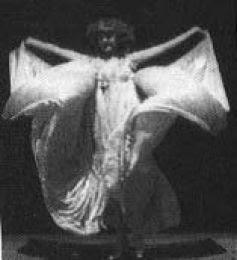
Yup, movies have had it rough. No one wanted to love them. No one wanted to believe in them. They were just pictures in motion-- one step up from the lantern slideshows. Yet, people became riveted, mostly the lower classes, who could afford to see the ramshackle Nickelodeons available to everyone. Since it was such a subordinate amusement, this gave the higher classes further reason to avoid the cinema parlors, but the fascination still grew. It turns out that people just love watching people. Just as gazing into the eyes of an oil portrait gave prior generations the ability to relate to another individual, to live vicariously through them, and to indulge in their own imaginations, movies took it a step further. Here was an actual carbon-copied, photographic representation of a living and breathing individual... and you could legitimately see them living and breathing! Society quickly became absorbed by it: by its technology and by its humanity. *(Still from Annabelle Butterfly Dance 1894)

And so, something happened. People started to believe and to consequently create. Stories were built, directors started innovating new techniques to take plays from the stage to the screen, and then original stories were given life through a medium whose presence opened a door to a whole new level of fantasy and communication. The great unifier was born. In black and white, the angels of silent cinema glowed brightly, bringing laughter and tears, taking us on emotional rides-- whether for 3 minutes or an hour-- and then delivered us safely back home. With directors like D.W. Griffith, Allan Dwan, and Clarence Brown, cinema became "art." With performances by Florence Lawrence, Mary Pickford, and Greta Garbo (right in The Saga of Gosta Berling 1924), movies became real.

And here we are, over a century after landing on the moon (via Georges Melies that is), and we have such a significant bulk of history at our very fingertips!!!. At times I am deeply affected by the fact that I am watching a movie that was made far before I was born; one that stars an actor who has long been gone. I am intimately acquainted with Tom Mix, Douglas Fairbanks, Norma Talmadge... I have never met them; yet, I know them. They continue to reach out to me and affect me after so many years. How is that possible? How lucky are we to have this privilege? To have the option of lavishing in the glorious ghosts of the past so freely?

Tom Mix and his horse, Tony

This is why, despite the occasional, minor setback, I am proud of my personal absorption in cinema. The study of film is the study of human beings: the study and appreciation of life and the education of empathy. What better lesson can one receive? By watching a movie, one learns about herself, about society, and about history. When you watch a period piece, you are given a glimpse of life at another time... But you also learn something, not just about the time period about which the film was made, but in which the film was made. The depiction of a different era reveals the contemporary society's opinions, morals, ideals, and standards about that era, and thus about itself. Wartime movies about war are significantly different than peacetime war films, for example. What will future societies say about our time? What will our ad nauseum, apocalyptic zombie films say about us? Fear, paranoia, vulnerability? What will our raunchy, buddy films communicate? Escapism, rebellion, boldness?

Obviously, not every film is a masterpiece. For every Citizen Kane there are thousands of White Chicks, New in Towns, and Anacondas. But every film is a contribution to the most moving and penetrating of artistic mediums. And, whether a film is considered good or bad, or so bad its good, we thrive on and enjoy the spectacle of it. Visual connoisseurs, we love gazing at a thing of beauty, whether that thing be Gene Tierney (below) or the fantastical universe of James Cameron's Avatar. As internally complex human beings, we love the intricate weavings of an engrossing story, because it explains us to ourselves in a way that no paid therapist can. Suffering from the pressures and stresses of every day life, we indulge for a moment in witnessing the lives of others, foreign and safe, yet strangely familiar.


So, do I hold a grudge against myself for at times thinking that I have watched and studied and collected so many movies that I may in fact have become one? No. We are all movies, and movies are all us. Besides, I would rather burn on a pyre of love for Grant and Bergman than for no one at all.


Tuesday, September 8, 2009

FLORENCE LAWRENCE: The First Movie Star


From Baby to Biograph

When Florence Annie Bridgwood was born on January 2, 1886, no one could have predicted that she would become a movie star... because movies weren't exactly being made yet!!! There had been several advancements in technology leading up to the establishment of "motion pictures," but it wouldn't be until 1889, three years hence, that Thomas Edison would
invent the Kinetoscope, which would alter the entire realm of cinematic possibilities. True, Florence was far from "Hollywoodland," born in Hamilton, ON to George Bridgwood (carriage builder) and Charlotte "Lotta" Dunn (actress). The baby of the family, with four step siblings and two biological brothers (George and Walter), she was destined to be lost in the shuffle. Not so at all!

Flo never really knew her father. She spent the
majority of her childhood away with her mother, George, and Walter, touring with the Lawrence Dramatic Company. An impassioned and gifted woman, Lotta was not meant to be some boring housewife, so she took her kids along with her as she tried to make an independent living, though she never divorced her husband. While George and Walter did not act past their adolescence, Flo got the itch young and couldn't scratch it for the rest of her life. She began appearing with her mother on stage at the age of 3. The company had noticed her ability to pick up dances and mimic expressions, so they worked her into the routines. She would wander on stage, seemingly lost, and the audience would giggle at the supposed mishap. Then, she would slowly join in with her mother's act, which of course left the audience in stitches. She would become known for her uncanny abilities as a tune whistler as she grew older, and having clearly received her calling, she and her mom went pro, changing their last names to "Lawrence," after the company.

As a little performer, Flo was a quick learner and a natural talent, who could light up the room with her abilities and energy. Passionate like her mother, she had a fire within her that would not be quenched, and the audience merely radiated in its warmth. A lovely singer, dancer, and comedienne, Flo also had a penchant for the dramatic, although as a young child she let the weight of the subject matter overcome her at tim
es. She would often cry herself to sleep at night, worried that she had made her audience sad. Her deep attachment to her work would always be a part of her life, but as she grew she did not let the gravity dampen her spirits quite as much. Ups and downs in her demeanor were always a present factor, but most people didn't notice. She tended to put her best face on and put all of her energy into pleasing the crowds, while remaining equally professional behind the scenes.

At 10, Flo's father passed away, though the loss had little effect on her. It was her mother that was her true compatriot. Lotta was definitely an intelligent and ambitious woman, but luckily she wasn't a control freak. She inspired her daugh
ter to be the best she could be, and Flo would spend her life trying to do so, but Lotta would not put her own hopes on Flo's shoulders. She had dreams of her own and did not expect Flo to fulfill her own failed ambitions. They were a separate but equal team. After her husband's death, Lotta took her three children to live with her mother, Grandma Ann Dunn, in Buffalo, New York, and the kids finally got the pleasure of a public education. Flo was the class clown and a tom boy, who led a "gang" of boys, played baseball, road horses, and (after breaking her nose playing ball) took up cheerleading as well. She was still an artist though, and she was quite proficient at both the violin and the cornet.

Though she had enjoyed the slow pace of a normal life, Florence wanted something new... a change! This was also an aspect of her personali
ty that would dictate many of her decisions in life. Impulsive and mercurial, Flo would begin one thing to drop it not much later, then pick it up again, then drop it, etc. What she wanted now was the stage! She and her mother began actively seeking employment with different companies to little effect. There weren't too many plays being produced due to the fact that there was new competition in town: motion pictures. The Great Train Robbery had been released in 1903 when Flo was 17. She also recalled seeing Rip Van Winkle. She found flicker shows entertaining, but had no real interest in pursuing a career in front of the camera. There was still a stigma attached to "film acting," and most of the beginning motion picture actors weren't even actors at all... Just regular Joes and Janes looking to make a buck. Eventually, due to the latter necessity, Flo began submitting herself for screen work. At least it was acting!

Wandering over to the Edison Studios at 41 East 21st Street with Lotta, Flo was introduced to a slew of girls looking for work. Fortunately, Edwin Porter and Wallace McCutcheon singled her out, mostly for the needed physical characteri
stics she possessed, and cast her as one of the daughters in Daniel Boone. Exteriors were filmed in zero degree weather in Bronx Park, and interiors were filmed atop the studio on the single set roof. It was fortunate that Flo knew how to ride a horse, for it would be required of her role. In 1907, Flo saw herself on film for the first time... and was horrified! Not by her performance, but by the inconsistencies of her frontier character wearing high-heeled shoes! She liked the look of herself on the screen, and became fascinated with the new medium. She vowed to educate herself as much as possible about it, and seeing the future of film, decided to quit the stage and enter a life on the screen. Surprisingly, Lotta protested, worried that Flo would shame the family as a film actress. Flo didn't care. This was it!

Flo auditioned everywhere, finally landing at Vitagraph Studios. Her next big picture was The Despatch Barer, a Civil War drama in which Flo was almost killed! While riding a horse through the woods, she was nearly driven right into a tree. This would not be the last time she put her life in danger. Early filmmakers were true re
negades; pioneers in a new world with no rules, no limits, and no protection. Their bold, and often crazy, moves paved the way for those who would follow. Vitagraph was an important example of this. One of the first official film companies, it was experimental and innovative, pushing the envelope in terms of storytelling with adaptations of Mark Twain and Shakespeare. Their film Romeo and Juliet is a subject of some controversy, with regard to Flo. Some historians credit her as playing Juliet, and others credit her contemporary Florence Turner. Vitagraph films remain some of the best preserved and most accessible silents to this day.

Flo made movie after movie at her new home with Vitagraph, including The Athletic Girls of America, which put her tomboy past to use,
and The Viking's Daughter. She had another stroke of luck when she met Harry Solter, a fellow struggling actor. He was given a break when, much like Flo, he was cast at Vitagraph due to the fact that he matched the physical description of a needed character. Actually, he matched the build of his director, who wanted to perform the stunt driving in his next film and needed a lead with a similar body type to perform the non-action oriented portion! Solter, coincidentally, had become friends with one David Wark Griffith in San Francisco. He tried to get his pal DW a job at Vita, but David wound up working at Edison.

Harry and Flo, however, got on swimmingly, and Harry fell hard for the golden haired beauty, but he had more than his share of competition! Flo seemed to favor Harry's advances, and in time he grew closer to her than her other suitors. He came to see how hard a worker Flo was, how much she sought her mother's approval as well as her own high standar
ds. She was at times dangerously self-critical. But he admired her perseverance and courage, as well as her abundant acting talent. When Harry and DW made the move to Biograph Studios together, Harry decided to take his girl with him. When sent to find a new lead actress for the studio, Harry, now an assistant director, was supposed to get Florence Turner. He brought back Florence Lawrence instead. Luckily, she had the acting chops to make his bold move worthwhile. Flo would now be earning $25/wk at the new studio, and she was no longer required to make her own wardrobe or paint back-drops! Finally, she was paid to act and act alone!


The First Star in the Constellation


Movies were becoming big business! By 1909 there were 9000 theaters operating nationwide. Because Flo was a legitimate actress, she became a real asset to Biograph. In fact, other film producers saw her talent and came calling, trying to lure her away to their studios. For now, she was content to rotate with Linda Arvidson and Marion Leonard for the lead female roles at Bio, and the rest of the time contributed in supporting or background work. Her first big leads with the new company were Betrayed by a Handprint and Behind the Scenes. Flo was in bliss, though as a hot-headed business woman she more than once got miffed when DW went to her boyfriend Harry to negotiate her career and not her! She was definitely a pre-feminist.

On Aug. 30, 1908, Harry went from being her boyfriend to being her husband when the two eloped to Elizabeth, NJ. They kept their union a secret, as many actors in the early studios did. Even DW kept his relationship with Linda Arvidson a secret when she became his wife. Harry was not the only one smitten with sweet Flo. By this time, the first fan mail had begun to arrive at Biograph. Normally, the letters were from lovesick boys or solicitous married men, but a good deal came from women too, who indentified with Florence's honest portrayals. Despite her histrionic and exaggerated acting style, audiences still saw something they could relate too. The humility she gave her characters was felt and more than appreciated. DW loved working with her, because she could keep up with his specific directing methods. These were strange days, when actors would arrive to work with no idea who they would be that day! Scenarios were often written on the spot and the possibilities were endless, so you had to be on your toes-- especially with DW, who of course did all of his own writing.

An important step in the acceptance of film, not just as entertainment, but as art, came when the magazine "Motion Picture World" began publishing film reviews. At the start, the reviews were clumsy, basically recapping the action, but later the writers really began to look at interpretation, performance, technicality, and style. A difficult part about writing these reviews, however, was that
none of the actors' names were released. Performers were referred to by their characters' names only. The studios' reasoning for this was a) they didn't want their actors to get too much power, resulting in the inmates running the asylum, and b) studios hadn't actually realized how beneficial it would be to profits to market their performers. So, Flo remained nameless in her reviews, which were always stellar.

1909 was an important year for Flo, in that it marked the beginning of what would be her most popular film series- The "Jonesy" Comedies. They were slapstick vehicles in which she played Mrs. Jones opposite John Cumpson, Mr. Jones. A favorite costar of hers whom she would also collaborate with often was Arthur V. Johnson, an early silent heartthrob (and alcoholic). They were fast friends and allies with very similar humors. On May 9th of this year, Florence performed in The Resurrection, her most praise
d and remembered film to date. She played Katusha to superb effect in this Tolstoy adaptation, with Arthur played opposite as Dmitri. Her performance is said to have been remarkable; the world was falling under her spell. The film was also an accomplishment technically speaking, for people couldn't believe that such an epic novel could so succinctly be translated into a mere 15 minutes of film! By the time Flo appeared in Lady Helen's Escapade, she had been given her first of many nicknames: The Biograph Girl.

Ironically, it was a
t about this time that Flo would meet the little golden girl who would later take this title from her: Gladys Smith aka Mary Pickford. Not knowing that the pretty little thing was a threat, Flo liked her right away. In fact, she, Mary, and Gertrude Robinson would often joke about who was the shortest between the three of them, for all were incredibly petite. Lilian Gish also began to appear on the scene, and she and Mary would be two of the women most responsible for elevating film acting to a whole knew level- one of subtlety and understatement. Their performances would in time render Florence's "balls-out" style obsolete, but for now the Queen was safe.     

Despite her current success, Flo was beginning to get a case of the "antsies." She had been at the status quo for too long-- she had divided and conquered, and now she was ready for new territory! She and Harry decided to break out on their own and freelance. (Sound the death knell). Such a move went against the newly established "Trust" that had pooled all of the studio patents and awarded licenses to all within the said group. It was essentially a way to maintain order and control by the bigger guy over the little guy in the business.Only those with a license could buy film, and thus make films. By defying the hierarchical system, Flo and Harry were taking a real risk, one that left them black-listed and unemployed. Flo didn't care. She knew the power she had with audiences, and she trusted that it would get her somewhere.

In the meantime, while Flo was idle, audiences demanded to know where their favorite actress had disappeared to?! Letter upon letter arrived to Biograph, asking why no sign of her was to be seen in any of the new films being produced. People bought tickets to movies at this time not really knowing who would be in it, or even what the story would be about-- there weren't trailers yet, remember-- so when they were disappointed again and again by their favorite Biograph Girl's absence, they grew miffed. Fl
o was doing her very best to get back into the limelight. She tried to get work at Essanay, but they wouldn't hire her for fear of upsetting the Trust. It was the equally bull-headed and independent producer Carl Laemmle who would take her on. His company, The Independent Motion Picture Company of America (IMP) scooped her right up and made her the "IMP Girl." In the Summer of 1909, Flo joined their already superb roster: William V. Ranous, George Loane Tucker, John Brownwell, J. Farreli MacDonald, Owen Moore (soon to be Mr. Pickford), John Cumpson, Thomas Ince, and the real coup- King Baggott.

Because the stud
io was independent, conditions weren't as spiffy at IMP as they had been at Bio. Laemmle was often going into near bankruptcy to keep his small studio afloat, and he was also in constant legal battles with the Trust. The studio was operated very shoddily with little in terms of money, tech, costume, or props. Still, they pressed on. Flo's first IMP film was Love's Strangers, and she worked steadily making a one-reel film, and later two one-reel films, per week. Laemmle was also the one responsible for starting the first publicity campaigns to get Florence's name into the public. He recognized the benefit of having a recognizable actress to advertise his films, draw in audiences, and thus draw in money to his theaters. Previous to this, theater owners hadn't considered the ability of a performer to sell a film, but Laemmle was a real business man, and his smarts would change the biz forever.

The use of actors in advertising began slowly with lobby cards and photographs of the players. This failed to please audience demand. Seeing gold, Laemmle decided that he wanted the world to know Florence-- for her face and name to be as familiar to them as the President's! So, he pulled a little stunt and found a way to start a rumor that the IMP Girl, FLORENCE LAWRENCE, had been run over by a car. When it hit the presses, it was hot news. People were devastated, until of course it was revealed that Flo was alive and well. Then Laemmle took it a step further by having Flo make a hugely pu
blicized personal appearance in St. Louis to prove to her fans that she had not "met her tragic end beneath the wheels of a speeding motor car." When she arrived at the station, her fans were so ecstatic to see her that they tore her hat from her head and the buttons from her clothes! Florence was both terrified and invigorated! She quickly became the highest paid actress in showbiz. After this, Laemmle would use the name of the "Girl of a Thousand Faces" to advertise all of her movies. Other studios followed suit, like Vitagraph, who made Florence Turner their #1 actress. But, there was no denying who the real star was. The first true star. All hail Florence Lawrence!!!

What Goes Up...

It seemed that F
lo had everything she wanted: the career of her dreams, wealth, stardom, adulation... But inside her still lurked the insecure and sensitive girl whose emotions, so effective on screen, weighed her down in her private life. Not only did Flo empathize too heavily with her dramatic roles, just as she had as a child, but she continued to place incredible stress and pressure on herself to constantly improve, or at the very least maintain her position at #1. The obvious result of this was the collapse of her marriage, which was beginning to show strain of its own. Of course, Harry was no help. An emotionally needy man, he was threatened by the attention Florence was getting, and thusly the attention she gave her work and not him. In a way, he seemed to want to sabotage her career, and unfortunately, Flo, who was too spontaneous to be a good business woman, often followed his bad advice. As a result, she ended her contract with the man who had made her a star, Laemmle, and said goodbye to IMP. She quickly signed up with Sigmund Lubin sometime around Nov. of 1910. Laemmle sued her for breaking her contract, which didn't help Flo's finances, since she was supporting her mother and brother Walter. It seemed a smart move when she invested in real estate, but this was plagued as well when the home she purchased went up in flames after the contractor disappeared with her money! The final blow came when Flo learned that Mary Pickford had taken her place at IMP, once again swooping in to take advantage of the opportunities Flo had naively given away.

Flo focused on work, making His Bogus Uncle in January of 1911. In 1912, "Photoplay" appeared, the first magazine completely dedicated to film fans who could finally read all about their favorite celebrities. Flo was a constant and favorite featured artist. Harry experienced some luck this year as well when he was recognized as one of the greatest directors of his day. However, Flo was getting antsy as usual. Upset with the doldrums of her life, she craved something more, but seemed to be struggling with finding out what it was. Co-stars would often see the quirky girl banging her head against the wall to exercise her
frustrations. She really wanted to break through to freedom and independence. At one point, she abruptly disappeared without a trace, and people were relieved when she returned from her vacation, which she had taken to calm her nerves, relax, and breathe. When time came to renew her contract with Lubin, she and Harry declined. Her last film with the friendly Lubin was The Surgeon's Heroism.

Flo was looking for the next rung on the ladder, an
d she was able to reach it when she and Harry established The Victor Company in the summer of 1912. She would of course be the leading lady, Owen Moore was leading man, and Harry was the director. With their own company, they could control what movies and projects they made and released. Flo loved having artistic control and essentially being her own boss. The studio was located at 575 11th Ave, NYC. The first film Victor produced was In Swift Waters. The Solters, in celebration, purchased a home in River Vale, NJ. Flo was glowing. She enjoyed the privilege of being the first female to own her own movie studio. However, the films didn't fare all that well. The scripts were barely tolerable, and fans did not like Owen Moore, who was never able to attain true leading man status. Flo didn't miss a step with fans, who still adored her no matter what lousy film she appeared in. She was beginning to feel the pressures of pleasing the masses as the discrepancy between her true self and the larger-than-life person they expected her to be became greater. She was hard on herself, especially when meeting a fan in person. She once remarked: "I always feel that people are so disappointed in me, when they see me for the first time." The new standard of celebrity was becoming quite a burden to bear.

Between personal and professional stress, Flo
and Harry were on shaky ground, and it wasn't long before they were separated. They would argue, live separately, reconcile, drift apart, etc. Ad nauseum. Harry had become frustrated with Flo's extreme vacillations in temperament, as well as the fact that she worked herself to exhaustion. Flo was sick of Harry's violent temper and feeble threats of suicide. To add fuel to the fire, they were unable to conceive, though perhaps in the end this was a blessing for such a volatile match. Flo was nearing a point of complete collapse. After Harry moved out yet again, Flo vowed to quit the business. As with all the ups and downs and back and forths in her life, it would not be the last time. She filmed The Lady Leone and retired to her new home in Hillsdale. The 18th-Century Mansion became her pride and joy. In lieu of acting, Flo studied languages, read, and took up botanical pursuits, making it her mission in life to develop a new breed of rose. Unfortunately, she would never accomplish the task. This time was rejuvenating for Flo, for she had peace, relaxation, and time to re-evaluate her life and decide where to go next.

Many changes in film occurred while she was on hiatus. Edison created the kinetophone, the first step toward sound pictures. Then, two-reelers became five-reelers, now providing the ever increasing audiences with a full hour of entertainment. People of every social status were attending movies, which were no longer considered an idle and brainless past time for the lower class. This resulted in the creation of great an
d luxurious movie palaces, which made movie viewing a whole new experience. Acting styles had also changed to the subtle gestures exhibited by Mary Pickford and Lilian Gish. Soon, Flo began to feel herself being left behind, and the competitor in her wanted to make her way back into the industry. Ironically, she re-teamed with Laemmle at his new studio, Universal, and made one film for him every two weeks. Her return was a triumph and covered by all the magazines. So often was she in the public eye that Flo learned to be cautious of the way she presented herself: what she said, how she behaved, and how she dressed. She learned to be diplomatic, always being confident in stating her opinion and making a stand where she felt it counted, while remaining respectful and thus respected. She was a staunch supporter of the suffragist movement, being a pre-feminist, but she made sure to balance her tough demeanor with softer qualities-- dressing delicately, doing needlepoint, etc. It was all a game really, and she was learning how to play it.

She kept up with the new film innovations as well, playing a dual role in The False Bride, which experimented with double exposure photogra
phy. Reviews of her dramatic interpretations in Unto the Third Generation and Influence of Sympathy were also highly praised. It is interesting to note, however, that while Florence's reviews were stellar at the beginning of her contract at Universal, they became more lackluster as her contract reached its end. Always up and down, Florence would come out on a new adventure like a cannonball, then succumbing to the pressures and perhaps even boredom she would begin to lose steam and set her sights elsewhere. Almost as soon as she entered a situation, she was looking for a way out.

This would seemingly make her look like an inconsistent and even erratic personality, and perhaps she was, but it isn't unreasonable to think that she truly was suffering despite the pluses of her movie stardom. She had wealth and adoration, true... but movie stars at the dawn of cinema were not exactly the "babied" snobs they are now. Not only was there a constant flow of work with no seeming end, but working conditions were less than cushy. Before the time of the star trailer or catered lunches, performers would work in the freezing cold or the blinding heat. Before unions, they would work hour upon hour until the scheduled shoot was finished without today's 12 hour cut off. Most importantly, before the day of the stunt man, they would often perform dangerous feats, risking their lives to add a little action to a sequence. The number of people who actually died for the sake of their art is not insignificant. Everyone is familiar with the amazing acrobatics of Buster Keaton, whose physical wonders astounded audiences, but he was a professional, and even he broke his neck. Literally. Leading ladies were no different: Helen Holmes, Helen Gibson, Cleo Madison... they all did things that could have claimed their lives. Florence was no exception, and she was about to make a great sacrifice as an artist that would haunt her for the rest of her life.

In March of 1914, Florence was filming The Pawns of Destiny with Matt Moore and Harry (yes, still) as director. One sequence required her to pull the supposedly unconscious Matt Moore down a flight of stairs while the house burned
down around them. Not only was Matt a grown man, who was more than a little too heavy for the petite Flo to carry, but the flames were also an obvious threat to her safety, and she had to perform the task 3 times. Something went terribly wrong. The exact situation is unknown, and many myths have appeared over the years. One story is that Florence was badly burned and that she went into seclusion to heal, after which movies did not want her anymore. Another is that she was injured while literally saving the life of Moore from the burning set. Neither are true. Florence was injured, but she would continue to work in films after the incident, so it didn't "ruin" her career, at least not immediately. She also did not seem to suffer burns, at least not severe or visible ones. The most traumatic result of what happened that day, was that Flo fell and hurt her back. A trouper, at first she thought nothing of the pain, but then it started to spread to the back of her head and neck, and she knew something was wrong. She went to bed to recuperate. She would get better, but things were never the same for her after, and Flo would persevere while incredible pain would plague her body until it eventually became intolerable. For now, fireball Flo was forced to slow down a little, though she would by no means quit.

While retiring for a little relaxation to her New Jersey abode with sometimes estranged and sometimes not hubby Harry, Flo underwent anot
her disaster when she was in an automobile accident. Apparently, it wasn't fatal, but the fender bender was sure to exacerbate he back, which had just been operated on. In all the fan magazines, Flo tried to sound optimistic about her health and well-being, and mostly about returning to work, but privately she was suffering. As soon as she lost the ability to do the thing she had taken for granted, she wanted it more than ever. She saw clearly, and perhaps for the first time, her remarkable gift, and not having the ability to utilize it began to slowly break her heart. Not willing to take no for an answer, Flo insisted on going back to work. This was her destiny! She was one of the most talented and well respected actresses in the world. She belonged in front of the camera, and by God that's where she would go!

So, back to old friend Laemmle and Universal she went, and her first picture back was The Elusive Isabel. She also made personal appearances, such as at the premiere of the Sarah Bernhardt vehicle Jeanne Dore to prove to her fans that she was alive and kicking, and the applause she received always warmed her heart and gave her hope. The public still mimicked her impeccable fashion sense, which was classy and modern always, and songs were even written about her, such as Emma R. Steiner's "Florence Lawrence." Flo was filled with hope when Elusive Isabel premiered on April 24, 1916. It was a personal milestone, her first full-length feature film! Sadly, the reviews weren't great
, and this disheartened her. Of course, the public never blamed her for a flop, and instead praised her for elevating a soppy film as best as she could. Still, it was a crushing blow.

This was the beginning of Flo's acting decline. It wasn't because her talent had diminished, nor that the love of her had died... But times were changing. Movies were moving west to a place that would become known as Hollywood. Movie theaters were turning into lavish and grandiose movie palaces, and the films that Flo was used to starring in weren't reeling in audiences anymore. Progress was being made and the original pioneers were being left in the dust, outmoded and obsolete. Birth of a Nation changed the way movies were viewed and made, and nothing could measure up anymore. Along with Flo's greatest friendly foe, Mary Pickford, a different kind of woman was stealing her thu
nder. Mary continued to pull off the beautiful girl next door thing, because her acting style was so fresh and authentic... But Flo became outmoded as audiences started wanting actresses a little more sexy and dangerous. Enter Theda Bara.

Where would Flo fit into all this? And could she?! As she felt her place in movies disappearing, Flo made every attempt to stay in the public eye, and of course, being the first star, she would introduce the first taste of glamour. She bought silver evening dresses and furs as if to prove that she was still a Queen. She could not deny the inevitable, however, that things were indeed falling apart. This included her private life. H
arry and she had finally reached the "D" word- Divorce. She was desperate to get out from under Harry's almost tyrannical control, but Flo did need guidance in her career. She was too impulsive to really be a shrewd business woman. With Harry gone, she lost a little stability, suffocating though it had been. She found herself strapped for cash, and even wrote to Laemmle for money. Later, she would try to sue in order to get some compensation for the injuries she had sustained, which plagued her. This was not an unreasonable plea. There were actors, like Grace McHugh who had died while filming, so a little compensation seemed in order. Though Flo came out "gun's blazing," she was no match for the studios. She was in trouble.

To keep her mind off the snowballing negatives in her life, Flo directed her impassioned focus elsewhere. She raised awareness for the Actor's Fund, returned to her rose garden, and did what she could to raise morale when WWI hit. She
even managed to make another film, with ex Harry of course, The Face on the Screen, but it sank at theaters. Harry's career was also faltering. It seemed that any movie he tried to make without his beautiful wife was a failure. He made his last film in 1918, ironically titled The Wife He Bought. Growing closer to her mother in this time of despair, Flo became somewhat of an entrepreneur. Lotta, like her willful daughter, was always a go-getter, and inspired her daughter to follow her lead in checking out different ventures to pay the bills. Together, they worked in real estate, mining, and even inventions! Lotta developed the first windshield wipers and Florence is responsible for the first turn signal! Flo's creation consisted of an arm that would drop from the rear of the car saying "STOP" whenever the brakes were pressed. Sadly, she never obtained a patent for her invention and received no money or glory for it. Lotta, always a better business woman, did patent her many inventions, including another that kept glass from fogging up. When the influenza outbreak occurred, Flo also directed much of her time and attention toward helping the Red Cross.

At about this time, Flo began to see her old co-horts dropping like flies, either exiting the business or making their final exit, period. One of her first friends in film, Arthur Johnson, died of tuberculosis, though many assume that was a polite way of saying he died of alcoholism. Hanging on by a thread, Flo made The Love Craze hoping it would usher in a comeback for her career. It did not. Then Harry died of a stroke, and with him went almost all memory of his years of work and innovation as one of the ea
rliest film directors. He did not even receive an obituary. Since their divorce had not yet been finalized, this made Florence a widow. Just another cherry on her sundae... As things in film turned sour, with Olive Thomas and Jack Pickford both dying tragic deaths, Flo turned her attention to the stage, signing up with the Mason Opera House in Los Angeles. She had finally gone West! Her new production manager, George Kern, was hoping the move would reignite her career, and falsely told newspapers that Flo would be welcomed at the station by the likes of Mack Sennett and Mary Pickford. Not true, and the charade did not work. Still, Flo went on to make The Unfoldment, and those who had worked with her and respected her continued fighting vigilantly for her career. In a world where Fatty Arbuckle was being accused of raping Virginia Rappe, and the public was beginning to turn on Hollywood, relying on an old, faithful actress would seem the logical step. Sadly, audiences did not latch onto Flo again. When The Unfoldment was released, it was overshadowed by yet another scandal, the murder of William Desmond Taylor.

Failing in business, Flo tried to put a little fire in her private life. She was married to Charles Bryne Woodring whom little is known about,
other than that he fought in the Great War and was a car salesman upon his return. They had known each other just five days. But even marriage could not distract her from her lack of roles. She did a part here and a part there over the next few years, but a steady career evaded her. She was getting desperate- lying about her age, and even getting her nose "bobbed." She also opened a cosmetic shop: "Florence's Hollywood Cosmetics," which never had much hope of success. Then, on Aug. 20, 1929 Florence lost her mother. Not long after, she and Woodring were divorced. Flo was truly alone. She was easy prey when Henry Bolton, a mysterious man, found her and convinced her to marry him. She did in 1933, only to discover he was an abusive alcoholic who beat her mercilessly. By March 1934, Flo had removed herself from his grasp and obtained yet another divorce. She would not marry again.

The Last Gasp

Broken hearted, but still determined, Flo made another stab at Hollywood. She landed a speaking role- talkies had entered cinema!- in The Hard Hombre starring Hoot Gibson. Flo surprised people with her youthful good looks, despite the fact that she was now 45. She also had a clear and unaccented speaking voice and handled herself very well in her cameo. This was pretty much her last hoorah, which is sad since she did such an amazing job. The rest of her work consisted of extra jobs and small roles in a
handful of other pictures. In 1937, she developed a painful condition, in conjunction with her sore back, which was attacking her bone marrow. It would probably be diagnosed today as something akin to myelofibrosis. The symptoms included fluid and pain in the abdomen, joint and bone pain, and skin eruptions. There was no cure. In agony, Florence also endured anemia, which was reasonably followed by depression. Florence had resigned herself to oblivion. Her moment, her brief moment in the spotlight, was over. All she had left was misery and memories. The stubbornly optimistic golden girl put a smile on for friends, but she knew she was dying. Furthermore, she knew her career was dead.

On Wednesday, Dec. 28, 1938, Florence c
anceled an acting job with Metro. Sometime in the afternoon, her neighbor at Westborne Ave, Marian Menzer, heard her scream. She found her writhing on the floor and called an ambulance, which rushed her to Beverly Hills Emergency Hospital. She was pronounced dead at 2:45p.m. She had consumed a mixture of cough syrup and ant paste. The suicide note she had left her roommates said the following: "Call Dr. Wilson. I am tired. Hope this works. Good-by my darlings. They can't cure me so let it go at that. Lovingly, Florence. P.S. You've all been swell guys. Everything is yours." At the age of 52, after 31 years in the motion picture business, the first movie star was gone. Her funeral on Dec. 30 seems to have been a small, private affair. Her body was interred at Hollywood Memorial Cemetery, now known as Hollywood Forever. For years, her grave was left unmarked, and Florence lay forgotten. Later, a sympathetic soul heard of her unmarked tomb and paid for a modest marker to be placed above it. I have heard rumors that this person was the gentlemanly Roddy McDowall. The stone says: "Florence Lawrence, The Biograph Girl, The First Movie Star, 1890-1938." Flo would have loved the fact that they shaved off a few years for her.

The brutal lesson of what Hollywood can do was taught to us early. The first star was raised up like a beacon of wonder, only to be shot dow
n before it reached its zenith. Flo showed us the grandeur of celebrity, the effect of an actor's charisma and storytelling power on the public, and then equally taught us the repercussions of living life on a pedestal set far too high. Florence entered the biz an impetuous and spirited talent who could not be contained nor denied, and exited a forgotten and lost soul, betrayed by the very people who had once claimed to love her. As with everything: there is dark and there is light. In recalling Florence, as a woman and as a friend, those who did claim to know her could not believe that she would kill herself. It was so unlike her. She was too strong, too stubborn, too full of life. Perhaps it was in one of her all too impulsive moments that she made the decision to end it all. How I wish her films were available to us. How I wish her name were as known as Tom Cruise or Julia Roberts, Clark Gable or Jean Harlow. Sadly it is not, and yet we owe her so much for what we are-- not as ravenous rag-mag readers, but as human beings, who for brief periods of time let our guards down, entrust ourselves to the safety of the theater, and let filmmakers and actors guide our souls. Florence was one of the first to crack us open, to offer herself up to us as a martyr for our emotions, an outlet for our laughter and sorrows. I am grateful for this woman, whom I shall never know. (Is it strange to feel that I do)??? Before I close the book on her, I will let her say farewell to you in her own words. From the final entry of the auto-biographical series she wrote for "Photoplay" at the height of her stardom:


"And now I say goodbye, I love you all-- love you with all my
heart and soul. When I look from my window at night I wonder if there is anything I have ever done to cause you pain. I hope not. So again, good-bye!"