FYI

Don't forget to refer to my Contents page for a more convenient reference to past articles.

For More L.A. La Land, visit my writing/art/film appreciation site on Facebook at Quoth the Maven and follow me on Twitter @ Blahlaland. :)

Wednesday, May 26, 2010

CAST-AWAYS: Part Three


Casting the pivotal role of Norma Desmond in the noir masterpiece Sunset Boulevard was no easy task. What Billy Wilder and the rest of pre-production knew was that they needed a woman who could play, not only a former actress, but a symbol of all that Hollywood represented-- at its best and at its worst. Norma had to be over the top-- the classic diva who had fallen under the spell of her own delusions-- but she also had to carry within her a torrent of pain. The performer would likewise have to be brave enough to go before the camera, warts and all, and show the world the remaining carcass of a once proud beauty. Though far from decrepit, for the latter reason, Mae West (left) turned the role down. She had a rep to protect after all!
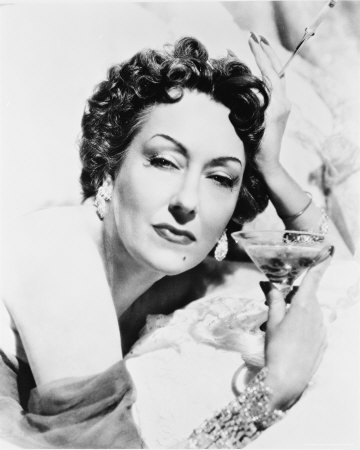

Mae may have seemed like a shoe-in, living in her own "Miss Havisham"-like palace at the Ravenswood Apartments where, in her land of pink and white satin, time indeed seemed to stand still. Mae had no qualms about showing her self-love and pride in her work, which could have transferred over well into a character who still sat around watching her old movies. But therein, the comparisons stopped. Mae's sole purpose in life was to bring joy and laughter to her audiences. Thus, playing a broken down, has-been turned  murderess was definitely out! Mae also would not have liked the idea of playing such a raw and emotionally dependent heroine; her ladies were tough as nails and knew there were plenty of Joe Gillises in the sea. So, the part more appropriately went to the incomparable Gloria Swanson (right), who threw herself so ferociously into the role of the silent film spider-woman that people would forever confuse her with the character. No shrinking violet, Gloria wasn't afraid to be dark and dangerous, and her unapologetic portrayal of the disturbed and love ridden femme fatale provided a remarkable bookend to a sterling career and, some say, the first era of film.


Mae's stamp still remained on the finished product, however, even if only in a small way. It turns out that she inspired the presence of Norma's pet chimp and thus the brilliant references in the film to Joe Gillis as Norma's monkey. Mae herself had a monkey, (as well as a house boy, if you refer to her companion Paul Novak as such), and Wilder found the inspiration too good to pass by. Who can imagine Sunset now without that fantastic monkey funeral???

Joan as the ultimate Mommie Dearest alongside Ann Blyth

Speaking of Noir... The classic Warner Bros. film Mildred Pierce rejuvenated an anxious Joan Crawford's dwindling career. After making the switch from MGM, Joan failed to impress at the box office, and the grand Madame feared that her days as a leading lady were numbered. When she heard of this vehicle, she lobbied hard for it, thinking it was a magnificent role and one that would put her back on top. Her stubborn elbowing and arm twisting eventually got her way, and her hard work and nuanced portrayal of a martyred mother won her the Academy Award. She was not always a shoe-in, however. When negotiations between her and the studio broke down before filming, the role was offered to another leading lady, Ann Sheridan (below), but she turned the role down. Had Ann said, "I do," it would have made for a very different film, for the laid-back, country girl was a far cry from the hell-bent and ambitious Joan. In the end, Ann didn't feel the part was right for her. Mostly, she was terrified of the daughter character, Veda, whom she deemed too horrible to be believed! No matter. She went on to make her own film noir, Nora Prentiss, two years later.


While Joan won the Mildred victory, she did lose a few here and there. She very nearly became the woman forever making love to Burt Lancaster on the beach in From Here to Eternity, but in the end those waves came crashing down on the refined, English actress, Deborah Kerr (left). Joan had caused too much of a ruckus by insisting that the film be shot with her preferred cameraman, and the studio heads finally put their foot down. Instead, they turned to Kerr, who would be playing against type in the role of Karen Holmes, the adulterous army wife. The casting gamble worked, for the fact that Kerr didn't quite fit in with her surroundings made her portrayal of the disgruntled and unhappy woman ill at ease with her place in life all the more compelling. The movie helped to crush her good-girl image and opened up more varied roles in her future.

The Eternal Beach Scene


 When Bette Davis (left)was first offered the role of Margo Channing in All About Eve, she thought it was a joke. Darryl F. Zanuck put in the call to Davis himself, but because the two had an ongoing feud and had not spoken in years, Bette thought the call was a prank from a friend. She played along, mhmm-ing and uh-huh-ing with an eye-roll, until it slowly dawned on her that she was indeed speaking to Zanuck! In shock, her tone changed completely. She agreed to read the script, which she adored, and said "Yes, yes, yes" to the role. 

By coming on board, Bette saved the picture, which had been put on hiatus because of the failure to secure the lead. Zanuck had at first wanted Marlene Dietrich, but director Joseph L. Mankiewicz didn't feel that she was right for the aging Margo. After all, Marlene did not age. Instead, he put his confidence behind the fabulous Claudette Colbert (right), who was thrilled to be offered the part. However, a back injury took her out of the running, although losing the part probably hurt more. In any case, every director under the sun warned Mankiewicz not to work with Bette, claiming that she was the most difficult of all film divas. Only William Wyler congratulated him on his coup, having worked with Bette on films like The Little Foxes. She was, he insisted, the ultimate pro. Wyler had it right, for Joe and Bette hit it off and had perfect chemistry on the set. Little ideas like giving Bette the container of chocolates to play with in the big party scene added even more layers to her incredible performance. Bette credited Joe with revamping her career. I guess it takes a genius to know one.

Ah, the magic of perfect casting...

Wednesday, May 19, 2010

MENTAL MONTAGE: Star Search


After one has been working in the industry for awhile, it only makes sense that he or she develop a knack for spotting other hopefuls who may have what it takes to find fame and fortune. Many actors and actresses are noteworthy for the selfless and helpful natures that from time to time compelled them to lend a hand to struggling hopefuls trying to make it in La La Land. I guess if you have that special X-factor, it gives you the ability to see it in others. Here are some examples of Stars finding Stars, or at least Stars predicting bright futures for some unsuspecting diamonds in the rough...


 May's lady, Ms. West, knew a thing or two about quality. She also knew a thing or two about men. There would be many times in her career when she would give a leg-up to a performer if she thought he or she had talent, but she is most notorious for finding the gentlemen gems that she cast in her films. For example, she boosted an already seasoned Randolph Scott's career when she cast him in Go West Young Man. She nicknamed the handsome actor "Randy," because she "could tell he was." (Haha). 


Most memorably, however, Mae made a movie star of Cary Grant. Some rumors remember Mae as discovering Cary when he was kicking up stones outside the Paramount gate, hoping to be chosen as an extra for a current shoot. This isn't completely accurate. Cary had already made several films with substantial-- albeit not breakthrough-- roles in films opposite the likes of Marlene Dietrich (in Blonde Venus). Thus, by the time Mae found him, he wasn't exactly on the extra market anymore. In truth, to Mae's own recollection, she heard Cary before she saw him. The uncanny accent reached her ears as she was sitting in her dressing room. Quite curious about the source of such a booming and almost regal sounding voice, Mae looked down from her window and saw Mr. Grant, finding his looks even more charming than his playful pipes. She decided then and there that she MUST have him in her new picture, and first starring vehicle, She Done Him Wrong. She did him right, because it was this film that shot Cary to super-stardom.

Both of Mae's finds became chums later.


When the saucy Norma Shearer retired from MGM, she lost none of her leading lady luster.Widowed after the death of Irving Thalberg, she took up with a ski instructor, and younger man, Martin Arrouge, solidifying her wildcat reputation long before "Cougars" were the rage. It was actually while staying at a ski lodge that she happened to notice a photograph of a lovely, young girl sitting at the reception desk. Norma recognized the unknown beauty as a star-in-the-making, and suggested that the girl's parents-- both employees of the hotel-- send their daughter to MGM. A kind recommendation to studio heads from Norma scored the young Janet Leigh a screen test and coincidentally a booming career. Had it not been for Norma's eye for talent, Psycho's shower scene would not have been quite so infamous, and Toni Curtis would have been short a wife-- (only one out of 6, but still)! 


Norma also helped out the lads from time to time. Since she clearly had an eye for a good-looking fella, it comes as no surprise that she scored another hit when skimming young men at the pool. Robert Evans happened to be sitting poolside when approached by Norma. At her suggestion, he tried his hand at acting, ironically portraying her first husband, Irving Thalberg, in the Lon Chaney biopic Man of a Thousand Faces, though he would have much better luck as a producer.


It makes more sense for directors to have a good eye for actresses, since they are always scouting out potential leads for future roles, but the way Alfred Hitchcock found Tippi Hedren is quite interesting. Hitch was sitting at home watching "The Today Show" (of all things), and during a commercial break, he caught a glimpse of the delicate and ravishing blonde in a Sego commercial. Hitch was immediately taken with the young model and had Universal call her in to sign a contract. Tippi, who was single and supporting her young daughter (Melanie Griffith), was all too thrilled at the chance to be a steadily working actress. In fact, so shocked was she at the amazing opportunity, that she didn't get around to asking who her mysterious director/benefactor was until after she had signed her new contract! Not only did she find that she was to be working with the famed "Master of Suspense," but for her first major role she would be playing the lead in his next picture, The Birds! One commercial for a diet drink and her life was forever changed. (However, had she known the repercussions of working with the obsessive Hitch, she might have dropped the Sego and run for the hills. For more on that story, as well as Hitch's strange relationships with his woman, read on here).


And finally... One day, a young mother was taking a walk with her baby girl. After covering some ground, she took a rest on a park bench and parked the stroller beside her. (If memory serves, she was at some sort of pier, but I could be way off. It's been awhile since I heard this one). Anywhoodle, an elderly woman happened to be walking by, and she stopped to peer into the baby carriage. She remarked on the child's beauty and predicted that the infant would be a big star some day. Since the baby grew up to be Brooke Shields-- the 6-foot-tall model, memorable for her Calvin Klein Jeans, full eyebrows, Princeton education, and performances in films like The Blue Lagoon and Pretty Baby-- it seems that the mysterious lady had a keen eye for star power. However, Teri Shields had no idea of what lay before her daughter at this point and was both proud and baffled when the woman walked away without another word. Even more perplexing than the glamorous prediction itself was the person it had come from, for despite the woman's age, Teri recognized Greta Garbo right away. If there was one woman who knew beauty, it was Greta, and the other beauty, Brooke, would grow up to fulfill all of the famous and enigmatic screen siren's expectations.

Tuesday, May 11, 2010

MENTAL MONTAGE: The Rat-Race of Race

The integration of different races into our cinematic culture has been a lengthy and complicated battle. The appearance of racial minorities in early film was both rare and heavily stereotyped. It comes as no surprise that in the days of segregation, movies too were segregated, thus the faces from the golden studio era that we remember are only intermittently peppered with non-Caucasian faces.

Even when a role called for a specific race or ethnicity that was outside of the Anglo-Norman norm, the character was portrayed for the most part by a white actor in make-up. Lon Chaney was praised for his incredible metamorphoses in Shadows, Outside the Law, and Mr. Wu, in which he defied stereotype and inserted great humanity and depth into his portrayal of different Chinese characters. Warner Oland (left) for years made his career by portraying Charlie Chan, and even Myrna Loy cut her teeth in cinema by playing Asian temptresses in films like The Mask of Fu Manchu opposite Boris Karloff. While these performers are to be commended for their sensitive interpretations, it does not take the edge off a rusty blade.


For example, Chinese actress Anna May Wong (above in Piccadilly)was forced to watch as the heroine O-Lan in The Good Earth was portrayed by Luise Rainier in "yellow-face" rather than by herself, an authentic Chinese woman. (Rainer won the Oscar for her performance). Anna was primarily offered the roles of venomous villainesses; the lead roles of long-suffering heroines went to white actresses in makeup, who could legally perform in love scenes with white actors. Anna was unable to engage in interracial romances on the silver screen, even if the actor performing with her were portraying a Chinese character. Still, Anna May paved the way for future Asian actresses, heightening her place in film through her nuanced and insightful portrayals. In a great show of character, she turned down the role of "Lotus," the evil siren of The Good Earth, after the role of O-Lan, which she craved and rightfully deserved, went to Ms. Rainer. Anna had talent, but she also had pride!

Even after an actor or actress such as Anna May Wong, Paul Robeson, or the lovely-- and already greatly missed-- Lena Horne had established themselves as respected and accepted members of the acting community, they faced their trials. Hattie McDaniel (left) was the first African American to win an Academy Award (for her supporting role as "Mammy" in Gone with the Wind). Her charismatic nature and jovial personality defied her stereotyped roles and endeared her to audiences so much that she became as famous and adored as her Caucasian contemporaries. Even her contender for her 1939 Oscar win, co-star Olivia de Havilland, would admit that the prize was rightfully bestowed. Despite all of this, Hattie would still have to combat prejudice.

Her one wish upon her death was to be buried in a shiny, white coffin at the Hollywood Forever Cemetery, the same place where so many of her acting contemporaries and predecessors had been laid to rest. However, even in death, Hattie's skin color did not qualify her as an equal. She was denied interment at the cemetery, and instead was laid to rest at the more racially friendly Angelus Rosedale Cemetery (ironically, the same place where Anna May Wong would be buried). Years later, to correct the terrible wrong that was done, Hattie's relatives were offered the opportunity to have her finally placed at Hollywood Forever, but since so much time had passed, and they did not wish to upset her body, she was left at Rosedale, buried not far from her brother Sam and actor Dooley Wilson, remembered best for his role as Sam in Casablanca. Instead, Hollywood Forever, and more specifically new owner Tyler Cassity, placed a monument dedicated to Hattie right next to the cemetery's pond, so at least in this small way justice could be done to one of cinema's most charming individuals.


Hatties resting place at Angelus Rosedale Cemetery

Hattie's Monument at Hollywood Forever.


Another actor who faced prejudice was James Baskett (above), who starred in the half live-action/half animated classic Song of the South. This film remains the center of controversy and debate, with many claiming that its subject matter is insulting to the African American community. The bulk of this argument has to do with the infamous "tar-baby" scene, as well as the continued myth of the "happy slave." It is more than safe to say that slavery never made anyone happy, a fact even Hollywood confirmed through films depicting the longed for liberation of white slaves and prisoners, including Ben-Hur and Spartacus (how fickle is history). Song of the South remains unavailable for purchase, (unless you are super savvy and know where to look on the down-low, ahem), and this is a true crime, for James delivers a beautiful and heartfelt performance as the lovable storyteller of the shenanigans of Brer Rabbit. His performance of the sentimental and eternal Disney song, "Zip-a-dee-doo-dah" is reason enough to allow this treasure to be shared. The film boasted a cast of many black performers, including Ms. McDaniel, and was a big step forward in the history of film.

However, despite his great performance and his leading role in the film, James was unable to attend the premiere in Atlanta. Due to the city's continued segregation, he would have been unable to enjoy any part of the celebration, thus making his attendance moot.  What a crime. I can still remember seeing this film as a child, and being enthralled by the music and the magical blending of the animated and the real worlds, much as I would be by Who Framed Roger Rabbit?.  To my youthful eyes, there was no difference between Mr. Baskett or any other actor. He was "Uncle Remus," and in my heart, he became my Uncle too. For future generations to be deprived of the knowledge of him makes me very sad indeed. Perhaps the world would be better if adults could see it as children do... But that is another argument all-together! Thankfully, James had the last laugh, receiving an Honorary Oscar in 1946 for his performance as amiable Uncle Remus (below).


This topic is one that is far too broad and all-encompassing to be discussed in one short article, and there are countless artists worthy of our respect and admiration for their pioneering efforts, from Dorothy Dandridge to Sidney Poitier; from James Wong Howe to Honorable Wu. I introduce the subject to mention Mae West's position in this corner of history. In Mae's heart, there was no room for prejudice or racism. To her, if you were talented, you were talented; it didn't matter if you were black, white, red, or purple. This is an attitude she learned from her father, boxer Battlin' Jack West, who befriended many black boxers whom he often invited over for dinner. Mae's equally giving nature also drew her to the underdog, and just as she would make great strides toward the acceptance of the homosexual population, so too would she do with the African American population. 

Mae: more than a pretty face

Working on the stage in New York before she made it to Hollywood, Mae was always raising eyebrows (and temperatures) with her discussion and portrayal of sex, prostitution, drugs, and murder. Her sense of humor was able to dilute the harsher topics of the day before she fed it to her audiences, who were both shocked and appreciative that such subject matter was finally being discussed in the open. One of the many progressive steps that Mae took was to introduce a dance that was popular in the black community to her audiences-- the "Shimmy Shawobble." She did so in the play Sometime, in which she referred to the risque and wild dance as "the Shimmy." It seems innocent now, but certain sects of society were absolutely shocked! The other half, of course, ate it up and asked for more. It was different, liberating, and exciting to the general, repressed theater-goer, and theater is, after all, all about living vicariously. During the influenza epidemic of 1918, the happy-go-lucky vision of joyous bodies in motion was certainly a welcome reprieve to frightened and paranoid audiences.

Aside from their dancing, Mae also adored "black music," aka Jazz. She therefore had no qualms about using it in her films when she went to Hollywood. In fact, she can be credited with presenting musician Duke Ellington to uninformed audiences with her Belle of the Nineties, in which she insisted that he perform his music himself. Paramount had wanted to hire a studio orchestra to perform the music, but Mae refused. Always deferring to the intelligence of her fans, she knew that they would recognize the difference and demanded the authenticity of Duke himself. People wrote to her in later years and thanked her for introducing them to his music. During this film, she also supplied jobs for many black extras, as she did in her other films. She was equally responsible for giving several African American actresses a leg up in her movies, casting Louise Beavers (above), Gertrude Howard, and Ms. McDaniel in various roles. The scene in I'm No Angel where Mae is sitting around with her maids, who are more like girlfriends, chatting it up and having a laugh, is still a memorable and entertaining piece of film. Actress Libby Taylor, in fact, had been a real life maid of Mae's, but Mae saw her talent and encouraged her to go into film-acting. She freely let Libby leave her employ and helped her to get a job in the business, including a role in Belle.

These little known facts are the things that people should know about Mae, but she always kept the sweetness that she carried within her cloaked from the public, not just to save her reputation as a hard-broiled dame, but also because she didn't need the flattery or validation for doing something that she considered the responsibility of any and every one. Her small contribution made a definite difference to the few black performers that she helped in the business, and the ripple effect of her efforts contributed to the noble war of equality that many argue is still being waged in the entertainment industry. If we learn one thing from Mae, it should be to tip our hats to these often overlooked but equally important talents of the silver screen, whose brave, boundary pushing movements have been worth their weight in gold.

Tuesday, May 4, 2010

STAR OF THE MONTH: Mae West

After showering our April tears for John G, let's move on to happier things and celebrate May's flower: Mae West!!!


Mae West is in a category all her own. When she first came around, there was no on like her, and now that she's gone, it is clear that there never could or will be another. Mae was a calculating businesswoman and a born entertainer. Her greatest joy in life came from giving the better parts of herself to others . So devoted was she to this cause, that she never let up on her own facade, even in her private life. She knew that, just as you can't have your cake and eat it too, you can't keep your idols when you bring them down to earth. In a time of financial and social depression, Mae remained the dependable diva, delivering sharp one-liners, decking herself out in diamonds, and lusciously curling her lips whenever a devious thought entered her head. To men, she was a sexy, no-nonsense dame who could give as well as she got. In other words, she was a turn-on. To women, she was a soul-sister, spreading a message of empowerment and liberation, and kicking down the wall between accepted male and female gender roles. There were no cliches in Mae's world, just honest, true-to-life characters played to the exaggerated limit! With her films, she invited hope and proved to the world that no matter what, no matter who you are or who people think you are, you deserve the best, and you can have it; all you have to do is reach out and grab it!


It's hard to see behind the caricatured remembrance that is Mae West. Today we seem to remember only a sex-crazed old lady who lived obliviously in her pink palace at the Ravenswood Apartments with boy-toys in tow. But this was not Mae. This was the illusion she created to loosen us up, relax our morals, and get us to enjoy life instead of waste it. Not that she didn't practice what she preached! But above her love of men or jewelry, Mae loved her work. One of the hardest working performers to set foot on the New York stage or the Hollywood sound stage, every effort she put forward was to create the best possible product for her fans. She was dedicated to doing something new and different and entirely her own, never settling for second best. For this, her audiences adored her and she them. She never refused an autograph; she never left a fan letter unanswered. She embraced all aspects of her career and her image, and for all of her 87 years did not disappoint.


Now, when watching I'm No Angel (above, with Cary Grant) or My Little Chickadee, the stories seem cheesy and the comedy is a bit outdated, but Mae remains as fresh-- and I do mean fresh-- as the day she set foot before the camera. Her one-liners are legendary, her attitude is indefinable, and her personality is unmatched. Mae was all woman, but she let us see that she could play with the big boys. She doesn't slink around like some precious, demure leading lady-- she struts into frame and takes command! With her charismatic energy, she's not a spitfire or a firecracker, she's a whole damn volcano! At heart though, she was a kind friend, a giving soul, and a precious American treasure. Her passionate drive and her unstoppable smarts enabled her to go through life with a wink and a smile, justly achieving any goal she dared to dream.

 For all she gave, she has rightfully earned her place in the Hollywood heart. She was a class act on screen and in life. In Night After Night, Mae responds to a coat-check girl's remark, "Goodness, what beautiful diamonds!" by saying, "Goodness had nothing to do with it, dearie." At her funeral in 1980, the presiding preacher hit the nail on the head when he stated, "Goodness had everything to do with it." I quite agree. Goodness, and a little naughtiness too.

Friday, April 30, 2010

BITS OF COINCIDENCE: Part Two


Time for more random encounters! Hope you find these entertaining ;)


When Louise Brooks and her new husband, director Eddie Sutherland (above), finally made the move from New York to Los Angeles, they were looking for a bungalow to call their own. While out house-hunting, they found an apartment that seemed to be a good fit. However, they got a shock when they knocked on the landlady's door: it was Mary Miles Minter (below), the reclusive actress who had gone into hiding, and slightly mad, after the scandalous death of William Desmond Taylor! How the mighty had fallen... Though Mary seemed harmless, albeit a bit loopy, Louise and Eddie decided to look elsewhere, settling down in the luxurious Laurel Canyon near soon-to-be pals John Gilbert and King Vidor.


~   ~   ~

Clara Bow was a huge success when she began filming on The Plastic Age. The entire American population seemed to have fallen in love with her, as well as her co-star, Gilbert Roland, with whom she would have an on-again-off-again affair for years to come. Though Clara was the current talk of the town, there was a man destined to be an equally huge star lingering in the crowd of extras. Knowing Clara's eye for attractive men, it is quite possible she noticed the young and handsome Clark Gable, but the two never had any kind of relationship. The same could not be said of Gary Cooper, who later had a bit part as a reporter in It and the male lead opposite her in Children of Divorce. These two became lovers, and Clara didn't mince words when describing just how "huge" a  star Coop really was!

 
~   ~   ~


Wallace Reid (above with pal Adela Rogers St. Johns) was slowly making his name in the business when he made the film The Ways of Fate in 1913. People had begun to take notice of the handsome leading man, but it would be another two years-- after he took his shirt off in Birth of a Nation-- that his star really began to rise! However, with his good looks and charm, he seemed to be a shoe-in for success, unlike the quiet, character actor who was milling about the Fate set as an extra. It would take another six years before Lon Chaney (below) crawled to fame as the contorting, "crippled" con-man, Frog, in The Miracle Man. After this show of gut-wrenching acrobatics, the entire world would know his face, or rather faces. All 1000 of them!


~     ~     ~

When Vivien Leigh (right) was attending the Convent of the Sacred Heart in Roehampton, England, she was already certain of her future. She knew that she wanted to be an actress, and she had no qualms about telling pretty much every one within ear shot that she was going to be a star! Imagine her surprise when, as a struggling actress, it was one of her old classmates who made it to the big screen first: Maureen O'Sullivan (below with Johnny Weissmuller)! After seeing Maureen in Tarzan the Ape Man of 1932, Vivien was more determined than ever to make it! She used her friend's success to re-light the fire in her own belly. She worked hard and tread the boards of the stage before making an on-screen debut in 1935's Look Up and Laugh. She would have to wait another 4 years for the role of a lifetime in Gone with the Wind.


~     ~     ~


The Baby: Jean Harlow

Most stage mothers push their children into the business to fulfill their own desires to be famous. Such was the case with Jean Harlow's mother: Jean Harlow! The younger Jean's given name was actually Harlean. She took her mother's name as her stage name when she began acting. (I wonder whose idea that was)? In 1923, Mama Jean and Baby Jean would move from Kansas City to Hollywood so that the senior lady could pursue a career on the silver screen. However, because Mama lacked the charisma later found in her daughter, they only remained for two years before packing it in and returning to Missouri. During her first brief stint in H-town, Baby Jean would attend The Hollywood School for Girls where she would befriend its only two male students: Douglas Fairbanks Jr. and Joel McCrea (below, respectively). In a few years time, these three tykes would be reunited, but this time as major Hollywood superstars!!!


Who will be star-crossed next? Stay tuned. Happy weekend!!!

Wednesday, April 21, 2010

HOT SPOTS... On the Internet!!!


As any movie lover knows, in this modern age of consumerism it is never enough to see a movie just once. When you fall in love with a film, just like any other romance, you are filled with an unquenchable need to possess the object of your desire. Unfortunately, we true movie-buffs find this difficult, because sometimes the most sought-after and adored films of all time are unavailable to the general public. Sure, there's the occasional re-release of a beloved classic and great venues like The Egyptian or The Silent Movie Theater that will unlock the vault of cinematic past for our present pleasure, and there is nothing like seeing a feature on the big screen. However, if you are as compulsive as I am, when you see something you like, you want it! Even though you know your bank account is low; even though you know buying new shoes would be a wiser choice of expenditure.

I have sought in vain for many a film, particularly when I am deep in researching a certain individual. The number of titles that are either completely lost or being held hostage astound and frustrate me every time. So many great storylines and brilliant performances have either deteriorated, been burned for silver, or are sitting in a lonely vault somewhere. But, through my diligence i.e. obsession, I have been able to find quite a few sites that can offer the needle-in-a-haystack pieces that even the almighty Amazon.com cannot provide, (though praise be to Allah that such a site exists too)! Since I consider us comrades in arms, I want to aid you in your common quest. Here is a list of sites for the most loyal of you movie-hunting lovelies. I would say don't spend your money all in one place, but if you live in a glass house, you shouldn't throw stones! Haha ;)

See it through the Grapevine:

When I randomly stumbled onto Grapevine Video's website, I thought I had died and gone to heaven! So many films from the silent era, starring its biggest as well as its lesser remembered stars, are here for the plucking! Salivating at the mouth, I managed to put 4 movies in my cart before I remembered that I had rent to pay and should probably restrain myself. The great thing about this site, aside from the number of titles and the great quality of the films, is that the majority of the discs are double-features or include some sort of short film or comedy, so it's more bang for your buck. The site is also easy to navigate, because it allows you to search by title, director, genre, or performer, so if you have a favorite actor, he and his work will be easy to find. If Rudy's your man, look no further. If you're partial to Blanche Sweet (above, left), it doesn't get any sweeter! They accept credit or Paypal, so the money exchange is a cinch. 

Vintage is always in fashion:

Vintage Film Buff has quite the plethora of forgotten 1930s and 1940s productions. If you like B-movies, horror films, westerns, or noirs, you will find great flicks and hidden jewels at this website. Overlooked stars like George Raft, Miriam Hopkins and Anna May Wong (right) are finally given a chance to shine here, and there are fabulous and scandalous pre-code films sure to aid you in indulging your naughty side. Many of these films are boundary pushing oddities, which makes them interesting to watch and easy to enjoy.

Unknown, But Not Forgotten:

I was able to find this company after buying a couple of their dvds through Amazon. Unknown Video houses a great deal of silent classics, particularly comedies and westerns. Mabel Normand and William S. Hart (left) are highly favored here, as well as racing gent, Wally Reid. The website doesn't seem to list all of their available movies, but each time I order from them, a small catalog is provided, which includes more of their releases. A cute bonus about these films is that they each come with a collectible magnet. I now have Fatty Arbuckle and Mabel hanging on my fridge.


Clara Bow Bound:

If you love Clara-- and let's face it, who doesn't-- this website is fantastic for finding nearly all of her films!!! Yeah, I know; I too found it almost too good to be true. Yet, there it is. The Clara Bow Page contains Bow's greatest silent and talkie films, so you can sink your teeth into Mantrap and Hoopla with no trouble at all! (Who needs the Library of Congress)?! These films are burned onto a dvd at your specification, and you get two for the price of one! The quality is great and the transaction is easy, with the option of checks, money order, or Paypal. There are also several other titles available with various stars, such as Ann Harding and Pola Negri. Definitely worth the gander.

Lon Ain't Gone!

Since Chaney remains my favorite actor, and it seems that his throne is secure from future usurpation, I was more than miffed when in the beginning of my adolescent studies, I was unable to find the majority of his titles on video (this was back in the age of VHS). Still, with the coming of Digital Video Discs, he was nowhere to be found. I sadly cherished my copy of The Phantom of the Opera and The Hunchback of Notre Dame and considered all other films exiled into oblivion. Not so! Unique Dvd has an ENTIRE collection of Chaney's greatest films in one fantastic pack! The downer is that you can't purchase one film alone, and you have to get the whole shebang; but for $50 you get 20 films, plus a copy of a Lon Chaney documentary. Where East Is East, Tell It To the Marines, and While the City Sleeps... They're all there! Chaney's diverse film work is available at long last, and the "Man of a Thousand Faces" can finally be appreciated for some of his less monstrous ones! Each film is the best known surviving copy of its kind, and a few incomplete films are included and edited together for the best possible version. For a true fan, it's like a dream come true. (Also available at the site are a collection of fascinating, banned cartoons and other various series). (Unfortunately, it looks like this site has been shut down. I hope it is only temporary, as avid Lon fans need access to his work. Stop holdin' it hostage, people!).

I hope that this information helps you all in your quest for the preservation of our cinema's history. If you purchase from these sites, be sure to thank them for the great contribution and honor they are doing for our artistic heritage. It is a truly noble effort, too little recognized. So, spoil yourself, get a little movie treat, and enjoy!