FYI

Don't forget to refer to my Contents page for a more convenient reference to past articles.

For More L.A. La Land, visit my writing/art/film appreciation site on Facebook at Quoth the Maven and follow me on Twitter @ Blahlaland. :)

Wednesday, November 16, 2011

MENTAL MONTAGE: Say what???


All they needed was a good father figure: the Dead End Kids pose during  
Angels with Dirty Faces. Jim Cagney rarely played family guy roles, and
his relationship with these characters is perhaps the closest he ever
came.

As much as we love our dear stars, they too make mistakes. Despite their grand, seemingly impenetrable reputations, they are in fact fallible, flawed, dare I say, "human." Even some of the celebrities I adore the most have at times exhibited such uncharacteristic and "off" behavior that it sort of left me doing the dumb dog look-- the ol' head tilted, one eyebrow up, "huh?" kinda thing. While occassional, deviant star behavior hasn't turned me against anyone, the consternation at the discrepancy between the perfect individual I had imagined and their imperfect actions does make an impact. At the very least, it reveals another level to the idol, which in turn only makes him or her more fascinating. Just when you think you have someone figured out, you realize you don't. Here is a cluster of out-of-character moves some of my favorite screen stars have made. After getting over the original irked feeling I received upon these discoveries, I was left trying to wrap my brain around them, and eventually I was able to conclude what I felt to be the source of their surprising, quirky moves. To err is devine...


JAMES CAGNEY & HIS CHILDREN


Perhaps of all the guffaws I've encountered, this one most particularly made me go, "Who? What? Why?!" James Cagney (right) came from a big, gregarious and supportive family. A warm and nurturing man himself, it only made sense that he want to become a father and pass on the same familial tidings to his own young brood. Well, apparently the will was there but the follow-through was weak. Jim had wanted children for some time, but discovered that he was sterile, so to fulfill his parental destiny he and wife Frances adopted two children, son Jim, Jr. in 1940, followed shortly by daughter Casey. While the outcome is not as notorious as the Joan Crawford/Mommie Dearest episode, it was far from a happy ending. See, Junior and Casey didn't even live in the same house as Jim and Frances! They had their own cottage out back, where they were mostly looked after by their own housekeeper. Jim was always kind to them and saw them when he could, but since he was a busy man focused on his work, he rarely had time to indulge full-time in a father-child relationship. Frances would claim that they built the house simply so the children would not be in the way while Jim learned his lines and prepared for the next day's shoot. He needed quiet and the space to focus and craft his characters. Obviously, one can understand that Jim was a busy man who was very dedicated to his art, but he too was a homebody. He never really went out unless to meet his buddies in the "Irish Mafia," so a normal domestic style would seem in keeping with his personality. It doesn't add up. So, what's the deal Jimbo? Why even adopt the kids if you don't want a real family?


DIAGNOSIS: The jury is still out on this one, but there are hints into the peculiar nature of Jim's home life. The only apparent glitch in the Cagney family system that raised a red flag was the relationship between his mother and siblings vs. his wife. Apparently, Frances aka "Willie" never fully got along with the rest of the Cagney clan. One suspects that this was because she and matriarch Carrie Cagney were both strong women vying for Jim's attention. When family get-togethers were had, Jim was always happy to go, but Willie was rarely invited, and when she was, she still didn't attend. Being the driving force behind Jim and his career, on paper it seems like Willie was a controlling, dominating woman-- albeit a devoted one. There is no argument that she deeply loved Jim, and indeed it was her suggestion that they even adopt in the first place. Unfortunately, she soon found that parenting wasn't her style. It is remembered by friends that Jim was always closer to the children than Willie. It is also recalled that Willie had a bit of a temper-- a trait which neighbors would witness from time to time-- while Jim always remained level and calm. For Willie, Jim came first, and clearly, the kids were a distant second. Perhaps, it was truly Willie who liked her space? Perhaps she convinced Jim that it would be better if the kids lived out back in their own house and left them to themselves? But then, it seems cruel to simply blame "the wife." Who knows... Since Jim was always kind to neighborhood kids and his pals' children, he clearly wasn't some emotionless monster. Whatever the cause of the odd decision, the result was not good. Both Junior and Casey became emotionally estranged from their adoptive parents as a result of their detached upbringing.


LON CHANEY & HIS FAN MAIL


Every movie lover has their number one favorite: the star that he or she thinks hung the moon. If one lives outside of Hollywood, the chances of seeing this personality in person are slim to none, so there are very few places one can turn for fanatic satisfaction: the theater, the movie magazine, or... the fan letter. As film personalities in the early days of cinema slowly turned into those glowing figures that we now know as movie stars, the desire to reach out and touch one became, well, Paramount in an avid viewer's mind. The need to make contact with or forge a connection with someone valued as larger than life could be an obsession to some, and soon enough random guys and gals began picking up their pens to write gushing letters to all the Gods and Goddesses on Mt. Olympus. Some were ridiculous, others erotic, some crazy, but most were just honest indications from a grateful public that one's screen work was affecting lives. It is always difficult to go out on a limb and open your heart to someone, especially someone you admire, but every day hundreds of people took the chance and crossed their fingers that their favorite "One" would respond to them with some token of him or herself: a photo, an autograph, or even a reply! In all his years, Lon Chaney (left in The Blackbird), who was one of the biggest and most worshipped of all film personalities, rarely ever answered his fan mail. He could often be seen toting his latest large bag of fan letters to the nearest dumpster bin, thus depositing numerous broken hearts into his "high-priced secretary." Why the cold shoulder Lon? Don't you love the fans that love you?


DIAGNOSIS: This one is fairly understandable when you break it down. Considering the number of fan letters Lon was certain to have gotten in a week, plus the amount of time he spent working, it is doubtful that he had any real time to go through his numerous letters. Nor did any other star for that matter. Taking exception to people like Mae West, Joan Crawford, or John Wayne, who lived for their fans, very few celebrities actually took the time to sit down and sift through their fan mail and send personal responses. Occassionally, one may respond to a letter here or there, but let's face it: the majority of autographed pictures sent from the studios were signed by an assistant, not the star himself. In addition, Lon was never in the business for the adulation. It was a job. Pure and simple. He publicly stated that he believed performers should pay more attention to their work and less to their fan mail, which he considered an inaccurate measuring stick for one's popularity. While he certainly respected the fans that kept food on his table, he was always uncomfortable with fantaticism. His dark brown eyes were notorious for boring holes into strangers with a pondering, "All right bub, what's the agenda?" He didn't want to either feed into the idea that he was extraordinary nor play the celebrity game of inflated egos begging for attention. He wanted too to maintain his station as the man of mystery, not just as a publicity coup, but because he sincerely wished for a private life away from the set. When the director yelled "cut," that's just what he did: cut and run. So, while it may make one chafe that he wasn't more attentive to his fans, you can't really blame him either. In person, he was always warm and pleasant, but he didn't suffer fools gladly and he even moreso tried to prevent himself from looking like one.


CARY GRANT & HIS AUTOGRAPH


In the same vein as Lon and his fan mail was Cary Grant's (right) reaction to his live fans. A strange phenomenon occurred later in Cary's career when he was accosted by a salivating worshiper. When asked for his John Hancock, he would ask for 25 cents. Eh? What's that? Yeah, I know. I had the same reaction. Why in God's name would a man who had more money than God ask for 25 God darned cents? It seems inconceivable that the man who was so light-hearted, charismatic, and often goofy in his films could be such a miser. In fact, it became a bit of a running joke in Hollywood that he was, for lack of a better word, a cheapskate. In effect, he was in life what comedian Jack Benny played on screen. Of course, there is no harm in knowing the value of a dollar, and in fact it's an admirable quality, but the whole concept of charging fans seems to be a bit overkill. One wonders what happened to the people that didn't happen to have a quarter on them. Did they just glumly skulk away? Were there revolts? Tears? Tirades?! The contrast between the witty, warm and caring pal that Hollywood friends recall and the man who would make such a demand of his fans-- who equally adored him-- seems a pill too hard to swallow. What's the deal Cary? Are you as cold-hearted as all that? Should we change your name to Ebenezer Grant?

DIAGNOSIS: From the lips of Eva Marie Saint: "He felt if you put a price tag around your neck, people appreciated you more." What few seem to realize about Cary is that he wasn't born the suave, polished dominant male force he appeared to be on the screen. His childhood memories were as bleak and cold as the chilly British air that used to freeze him to his bones. Little Archie Leach would lose his mother when she was placed in a mental facility for her chronic depression. He was then abandoned by his father when he found a new wife and family. Lonely, hungry and with no desire to finish school, Archie just wanted to escape, which he did when he joined a vaudeville troupe and hooked a ship to the US of A in 1920. After more struggles in the acting world, his determination to make something of himself and shake away the melancholy of his past paid off. After being handpicked by Mae West for a plum role in her first major film She Done Him Wrong, the new Cary Grant took off professionally and never looked back. But, his impoverished childhood always haunted him, and while he was secretly very charitable, he too had a reputation for being tight with a penny. Yet, while Eva's assessment can thus be considered accurate-- that Cary wanted to both maintain his position and prove his worth, while making a bit of a profit-- he too, I believe, used this tactic as a form of protection. Proud of his accomplishments, but always insecure of himself, he would once quip: "Everyone wants to be Cary Grant. I want to be Cary Grant." He wasn't joking. Public attention, while appreciated, also made him uncomfortable, as if sooner or later the fans were going to catch on that he was just a hack in a fancy suit. Thus, the 25 cent deversion tactic became a way to keep the wolves at bay. Hell, I woulda paid it. He was worth much more!


KATE HEPBURN VS. GINGER ROGERS


Katharine Hepburn (left) was considered by many in the film industry, and outside it as well, to be a person of considerable loyalty and strength. The number of times she was called upon to help a friend, a random acquaintance, or even a complete stranger are numerous, a fact that I have recorded in past blogs (see example here ). Her optimistic spirit and sturdy, level-head made her the typical Taurus-gal, which may explain why, while others came and went, lost their careers, or succumbed to mental or physical ailments, Kate always seemed to be as happy and healthy as a horse-- or rather stubborn bull. There too are accounts of her coming off a bit haughty, which is a characteristic she put to brilliant use in films such as Stage Door and The Philadelphia Story. She could rub a more sensitive person the wrong way, merely because she was a bit distant-- flinty. While on the screen she let her emotions unravel, in life she seemed to lead with her head not her heart. She was a woman of wit and gumption, not warmth and tears. Yet the lives she touched and the impact she made is extraordinary, which makes the memories of Ginger Rogers seem so peculiar. Apparently, the two had a bit of a competition going on, although both would deny it. As the top female stars at RKO during their mutual reign, the press made much of their alleged clash of egos, but how factual this rivalry was is debatable. However, while Kate kept mum, Ginger did let loose a couple tales of "off" Kate behavior. One episode recalled Kate kicking Ginger in the shin during a screen test for Mary of Scotland. Another account has Kate tossing a glass of water at Ginger's new mink coat to see whether or not it was "genuine" fur. Ginger expressed no hate at these deeds, but rather consternation. Why the hate, Kate? What did lil' Ginger Snapper ever do to you?


DIAGNOSIS: I think this one comes down to a simple and unfortunate misunderstanding. As Kate is one of my all time favorites, it is natural for me to want to jump to her defense, but I don't think such a inclination is unfounded. Proof in her past shows that she truly was a woman of good character and selflessness. Thus, the strange Ginger fiasco remains a pickle. However, I think it can be traced back to the original incident on Mary of Scotland. At the time, Ginger (right) was sick of playing the same roles over and over and wanted to prove that her talents went beyond her taps. So, she finagled a "fake" audition for the role of Elizabeth Tudor in the film opposite Kate. Ginger was known for her pranks, and with the help of director John Ford, she planned to come do the screen test in makeup under the alias Lady Ainsley in order to convince producer Pandro Berman that she was right for the part.When she hit the set, no one recognized her, except of course Ford and Kate-- who would be doing her "audition" scene with her and had been let in on the scheme. Ginger could sense that Kate wasn't happy, and when they started going through their dialogue, suddenly Kate let out: "Who do you think you're fooling?" and kicked Ginger beneath the table. As this came out of nowhere, I can only imagine that Kate felt that Ginger's shenanigan was devised merely to cause trouble and unnecessarily slow production. She probably thought the whole thing was a gag and was unaware that Ginger was serious about obtaining the role, a theory that Ginger's elaborate wardrobe and fake name encouraged. A pro, such a waste of time certainly miffed Kate, though perhaps she overreacted when showing Ginger where she stood. Ginger didn't get the role, needless to say, and Elizabeth was played by Florence Eldridge.


The RKO divas size each other up in Stage Door.

However, with this bad blood already between them, Kate must have formed the opinion that Ginger was an attention-hungry wise-ass, more interested in fame and games than doing good work. This would explain why she took pleasure in the second event. Ginger had stopped beneath George Stevens's office window on the lot to say "hello" and show off her new coat when Kate jokingly tossed out the water, probably thinking it funny that the superficial diva's silly new coat was in jeopardy-- though as a real mink it obviously went unharmed. The humor did not translate. Ginger made a few efforts over the years to get Kate to warm up to her, though the two would never be friends. Yet, over time, it appears that Kate did soften, perhaps finally realizing that Ginger was a good egg and not the miscreant she had originally thought her to be. When Ginger beat her out for the Oscar, winning for Kitty Foyle against Kate's comeback role in The Philadelphia Story, Kate sent a nice letter of congratulations, and publicly stated that she thought Ginger's performance had been great. Perhaps this event alone proved to her that Ginger was indeed a serious actress. Yet, it may just be a good, ol' fashioned cat fight, which, sadly, all females engage in at one time or another. After all, the two were polar opposites playing the same game: they both were engaged to Howard Hughes at different points, starred in films to equal acclaim, and perhaps just rubbed each other the wrong way. Since Kate never let us in on her side, and we only have Ginger's recollections to go by, it also leaves the question of how trustworthy our narrator is. After all, despite the fact that Ginger was a naturally sweet and well-liked person, no party is completely innocent in a feud. She quite possible could have done something equally out of character to peeve Kate off. In the end, it doesn't really matter since both women walked away equal winners, box office champions, and eternal film idols. The history of film would be lacking without either them, and at least their confrontations make said history more interesting.

Wednesday, November 9, 2011

Didja Know: Part III

Here are the latest facts that were "news to me." Didja know that...


Cagney gets a little rough with Bogie in Angels with Dirty Faces.


... James Cagney almost slept with the fishes???


In 1939, James Cagney and George Raft went to work on the intense prison film Each Dawn I Die (left). The two leading men knew each other and got along well. Both had grown up "in the hood" as it were, and had rubbed elbows with some of the nastiest ne'er do wells-- some of whom would go on to become leading gangsters and Mafiosos. However, both managed to keep themselves from becoming too deeply involved in the mobster lifestyle. For his part, Jim stayed completely away from the men he considered morally reprehensible. George, on the other hand, forged certain alliances when acting as a chauffeur for certain goons in his Hell's Kitchen days, yet he never got into the deep stuff. A suave guy, he knew how to play the game, kept things social, and stayed out of the business, while giving the bad guys just enough allegiance to maintain their respect and his own separate life. These connections would come in handy. James and George met again in Hollywood, and Jim got George one of his first big breaks dancing the "Peabody" in Taxi. Later, George would return the favor.

During the big Hollywood shakedown, when gang warfare had resulted in physical and financial intimidation of the studios-- who were forced to use mob managed union workers-- the notoriously stubborn Jack Warner must have been causing the big guns a little bit of irritation. While on the set of Each Dawn I Die, George happened to see his old pal Willie Bioff wandering around the set. Bioff's eyes landed menacingly on Cagney, no friend to the mob, then moved up to a large klieg light hanging above. George then witnessed Bioff give a signal to a worker standing in the rafters. What George didn't know, was that Bioff was planning a celebrity assassination: he wanted to take Cagney out by dropping a light on his head! Offing one of Warner's biggest stars was a definite way of sending the big-wig a message. It has been popularly recalled that George stepped in to save Jim's life, but this is only partially true. George clearly knew that something was afoot, but he didn't know what, and he also knew better than to get in the middle of it. Later, after the film wrapped, Bioff told George that he was indeed going to bump Cagney off, but had been halted because they didn't want to screw up filming for George. So, in effect, George did save Jim's life, even if indirectly. One wonders if Jim ever knew how close he came to curtains???


Of course, Jim always knew that life on a film set was dangerous. Not only is a film celebrity's career constantly in jeopardy due to changing public tastes, competitive talent, or demanding moguls, but before the advent of the Screen Actors Guild-- of which Jim was a proud member and instigator-- performers were often put through the mill emotionally and physically. Overworked, underpaid, and unprotected, the company brass had little concern for the pawns in their money game. After all, if you lose one actor, you can just hire another. This mentality led to the lackadaisical way actors were put in danger. Ever notice how in those old Cagney pictures and likewise gangster films, the shooters are always pointing their guns at a downward angle? This was because they were often shooting with live rounds. For those big productions, when Jim had to outrun or dodge an array of bullets, he wasn't acting. When working on The Public Enemy, for example, a man named "Bailey" was hired as a professional sharpshooter. Having served in the Great War, Bailey was an ace shot. The director would set up the scene and direct the movement, then Jim's character would be instructed to run this way or that away from the spray of bullets, which Bailey, from his gunner platform, calculatingly fired behind him, leaving authentic bullet holes along the walls of the set. Filming these scenes took a lot of guts-- or stupidity. As good a shot as Bailey was, it took a lot of trust for Jim to perform knowing that if he moved a hair out of place, he might lose his whole head! Luckily, the miracle of special effects has made this method of gun play obsolete on the sound stage.


... John Barrymore had one up on Al Jolson?


Everyone recalls The Jazz Singer as being the miracle film that moved cinema from a land of silence to a world of sound. However, this transition did not occur overnight. Even The Jazz Singer itself was not an in toto sound film from start to finish. Instead, it is a silent piece with synced music in various places, into which Al Jolson stealthily added a line of dialogue or two. Before continuous music and dialogue became the norm, there were films produced with random sound effects, profiting off the gimmick of the new innovation. Inserted into the fray were a whistle here, a car horn there, and occasionally entire songs. But, before The Jazz Singer was released in 1927, John Barrymore's romantic epic Don Juan was produced in 1926 (left). It represented another step toward sound film in that it was actually the first film Warner Brothers released with the use of the novel "Vitaphone." Warners really spearheaded the sound film movement by investing in and acquiring this new apparatus, while the rest of the industry remained hesitant both about the change and the huge costs it would incur-- not only in production but in restructuring theaters to suit the new technology. The first Vitaphone feature film, Don Juan was synced from start to finish with sound effects and music, though dialogue was still noticeably absent. When played to packed houses, it was often accompanied by more talkie shorts and even an intro by the fearful censor boss, Will Hays.The film was a huge success as a result, but despite big box office, it failed to recoup its financial losses. This put Harry Warner off a bit, but Sam Warner-- the most forward thinking of the brothers-- really pushed for continued use of the device. His pegged the next Vitaphone feature as The Jazz Singer. Though not the first film produced with the Vitaphone, it would in time prove to be the most vital. Ironically, Sam would pass away one day before the premiere of his greatest success.


... the Egyptian was the first Hollywood movie theater?


Back in the early Hollywood days, the awkward transition from live performance to recorded film was evidenced in the film premiere. These days, one merely sits back as the opening credits start to roll, but in the 1920s especially, the film premiere was made to be almost as big a production as the film itself. Sid Grauman personified the extremities of cinematic extravagance with his plush movie palaces, complete with vast stages for elaborate pre-show performances, skits, dance numbers, and songs. The theater-going experience was just that-- an "experience," and one ripe for the senses. In addition to transporting his paying customers and clientele to various different places as they watched the screen, Sid too constructed his theaters to resemble far off, exotic locales. Grandeur, splendor, pleasure-- there was no holding back, and customers paid to be awed. While his Chinese Theatre is best remembered, he too had great success with a previous venture, The Egyptian Theatre, which opened 5 years earlier in 1922, mere blocks away on Hollywood Boulevard (right). This was the first official Hollywood movie theater because it was built specifically for cinema and was not a transformed storefront or vaudeville theater like the others, including The Iris.

Modeled after the infamous African country, and cashing in on the invigorated interest in the recent King Tut phenomenon, Sid covered the Egyptian's walls with ancient artwork and hieroglyphics, convincing audiences that they were sitting in the midst of a desert mirage. Lining the red carpet entrance, where fans stood to watch their favorite stars attend premieres, there too were rows of vendors offering souvenir items and showcasing costumes and props from the latest flick. Needless to say, the largess made it a huge success. To Sid, it was all in the details. He even had a sentinel fully costumed, standing on the roof of the theater to announce when showtime was about to commence. After the pre-show hooplah, the fan mayhem, and the dancing girls, it's a wonder anyone had any energy left to even watch the scheduled movie. Because Sid created this first massive theater, he literally brought film to Hollywood, which until then wasn't considered the hub of the industry it is today. With studios scattered all around Los Angeles, Hollywood and cinema had little connection until Sid came along, which is why he was given the name "Mr. Hollywood." After nearly 90 years of operation, the Egyptian is still going, though it's interior has changed a great deal. Nonetheless, it remains the oldest running 100%-movie-theater in Hollywood.

 
... "virgin" is a dirty word?


In 1953, Otto Preminger decided to tackle Hugh Herbert's smash play and turn it into a film. The Moon is Blue, a comedy of wit and manners, may have read like a modern Oscar Wilde play, but it translated like a bombshell. Opposing forces took offense to the very open and lighthearted dialogue with regard to sex. The film's heroine is a young, outspoken, and charming girl played by newcomer Maggie McNamara, who just happens to be a virgin and makes no apology about it. After she meets architect William Holden on the Empire State Building observation deck (where else?), he becomes completely smitten, but is mostly consumed with the idea of-- politely-- ridding her of the tedious "virgin" label. What results is a inept seduction with fellow suitor David Niven thrown into the mix and both boys realizing that they're no match for Maggie's smarts. Despite the fact that all ends well, in matrimony, MPPDA head Joseph Breen was hot under the collar due to the casual way with which sex was discussed, not to mention the open way in which the characters of Holden and Niven went about hatching plans to seduce their innocent prey. Breen refused to give the film the censorship's seal of approval, but Preminger released the film anyway with the help of United Artists. Such a thing was unprecedented. Due to the film's themes and the use of words like "seduction," "mistress," "pregnant," and "virgin"-- the latter of which had never been used in such context in a film before-- several theaters refused to show it. It started at small venues, slowly drumming up a fan following, and eventually earned a hefty $3.5m dollar profit. "Virgin" thus became the word that started the toppling of the production code administration. The film was additionally successful in earning McNamara an Academy Award nomination and winning Niven a Golden Globe, (which was doubly eventful for him, since originally the studio didn't want to cast him, thinking he was old news). 


... porn is nearly as old as film itself?

That's right. We've all been dirty perverts a long, long time. It's nothing new. While some pinpoint early German sexual education/health films as the earliest source of pornography, the movie labeled as the first official stag film is 1915's A Free Ride (right). There is some debate as to the year of its release, which may actually have been later, around 1923, but thus far it is the oldest surviving product of our cinematic debauchery. The plot is about as intricate as those today: some random guy picks up some random girls on the side of the road. After he pulls to the side to relieve himself in the desert, one of the two females follows him to do the same. The sight of her panties dropping apparently is more than he can handle, and before you know it... Yadda yadda yowza! Because such levels of sexuality and outright raunchiness were illegal, the film was not released publicly but was instead shown in all-male clubs, so as not to offend delicate, female sensibilities-- excluding of course the two female leads. What can be said about this now hilarious attempt at celluloid erotica, is that the filmmakers apparently embraced its comedy. The director is credited as A. Wise Guy, the DP as Will B. Hard, and the title writer as Will She.

Tuesday, November 1, 2011

STAR OF THE MONTH: James Cagney


James Francis Cagney


To his fans, he is the eternal gangster; to his friends he was "the faraway fella'." His reputation on film is that of a man toting guns and intimidating enemies, yet he won an Oscar for his portrayal of song and dance man George M. Cohan in Yankee Doodle Dandy. Passionate and intense in his craft, he was warm, well-read, and private in his personal life. There is little, if anything, negative that someone could say about James Cagney the man, and while one could certainly make incriminating statements about the characters he played, even this would be done with a knowing and respectful intonation: even Jim's crooks were somehow likable. James Cagney-- who preferred 'Jim' to 'Jimmy'-- was a successful actor because he knew where to draw the line between fact and fiction, between right and wrong, between business and nobody's business. Along with his troupe of pals, jokingly called the "Irish Mafia"-- Spencer Tracy, Pat O'Brien, Frank McHugh, Ralph Bellamy, and Robert Montgomery-- Jim would help to define not only what it meant to be a man in depression-era America, but what it meant to be an American full stop. Whatever road he led us down, we would follow; we trusted him even when his characters were mistrustful, because beneath it all, we knew that Jim was being honest. It would be easy to merely reiterate the stories of Jim the film heavy, Jim the original hood, and, of course, Jim and that grapefruit... But there was much more to the man than that. So much, in fact, that his conflicting screen image and the salt of the earth guy he truly was are nearly irreconcilable and very, very hard to articulate. Here goes nothin'!


Jim in one of his personal triumphs: Yankee Doodle Dandy.


Beverly Hills was a long way from James's impoverished youth in the Lower East Side of Manhattan. His alcoholic but warm-hearted father's premature death would have a devastating effect on him-- the second born of what was to become the 5 child brood of James and Carrie Cagney. Jim's memories mixed the bitter and the sweet: his father's jokes, pitchy singing, and friendly rough-housing were too co-mingled with the patriarch's painful migraines and intense physical spells that sent him wailing like a banshee. The breadwinner of the family was lovable but undependable, and a great deal of the financial hardships fell on the determined Carrie and her children. Luckily, where James Sr. was weak, Carrie was strong. The family rock, she coached all of her children to be fighters, to use their heads, and to live right and honestly in the land that had afforded them so many privileges-- even when those privileges were difficult to see. An unspoken truth among the siblings was that the shy but sturdy Jim was her favorite. When he showed talent in drawing, she hoped that he would go on to become an artist. He didn't shrink from the idea, but he had trouble deciding upon his life path. He always seemed to be off on his own, moving through the world without really being a part of it, which was fortunate, since most of his friends got sucked into a life of crime. In his youth, he witnessed pals being arrested and men dying in the streets. While not immune to these tragedies, Jim's familial love and natural optimism pulled him through. Quiet but resilient, he could be counted on in neighborhood fights when there was a wrong to be righted or a smaller kid that had to be defended, but he never started brawls. He finished them. He preferred reading or daydreaming about living on his own farm, splendoring in the earth, and riding horses. The city boy was a country bumpkin at heart.


James put his childhood bouts to use as a boxer in City for Conquest.

Early in life, Jim considered becoming a boxer. With his mobile dexterity and fancy footwork, despite his short stature, he packed quite a wallop. However, Carrie put the kibosh on that rather quickly by challenging him to a duel of fists with her-- she wanted her son tough not dead. Jim instead transferred his physical prowess to a more graceful outlet: dance. His introduction to stage performance was a bit serendipitous. He wound up taking on a role in a play for his brother Harry when he became ill. His natural ability, straightforward delivery, and knack for actually listening to the other actors, made him stand out-- even if he did talk a little too fast. Later, that would become one of his trademarks. Jim graduated from a theater doorman (a job through which he absorbed a true appreciation for the art of performance) to a vaudeville performer uneasily. He loved life on the stage, but he was mostly concerned with finding work that paid. After he met and fell in love with Frances Vernon-- who had a crush on the "cute, quiet, red-headed boy"-- he realized that he could have both. The second strong woman fighting in his corner, Frances, whom Jim called "Willie," pushed him to hone his abilities and embrace his potential. Her belief in him would keep the two of them going when Jim was ready to give it all up to become a doctor, like two of his three brothers. After he and Willie were wed, they started performing in a vaudeville song and dance act together, performed separately when money was needed, and even temporarily opened a dance school to stay afloat. While their professional union ended, the marital one lasted until Jim's death.


Jim and Jean Harlow in a The Public Enemy, a big break for 
both of them.


Hollywood entered Jim's life, or vice versa, when he had some success starring opposite lifelong friend Joan Blondell in the play "Penny Arcade," which was made into the film Sinners' Holiday at Warner Brothers. Jim wasn't sure about Tinsel Town and figured he would make one picture and return to the stage, but he was offered a contract and took it. He and Warners would endure a hot and cold relationship for their remaining years together, not because of Jim's vanity or temperament, but because he quite simply didn't need the fame or the BS that went along with it. He only wanted to work. When Warners started giving him lousy roles, or when he saw the sharp contrast between his hefty box-office revenue and his minuscule paycheck, he would simply revolt. With his crafty and business-savvy brother Bill acting as his manager, Jim was able to play the Hollywood game his own way. By sticking to his guns, he would usually get what he wanted, while maintaining his artistic, personal, and professional integrity in the process. This did not always make Jack Warner happy, but he couldn't argue with receipts. This sense of genuineness and innate goodness is what drew audiences to Jim. While Sinners' Holiday was his introduction, he would really burst on the scene in The Public Enemy, using the mannerisms and character traits he had witnessed on the streets of New York to pepper his performance with a startling authenticity that had critics raving. Nasty, selfish, and unapologetic, Jim still managed to be somehow adorable. His approach to his characterizations gave audiences room to breathe and enjoy the fantasy without becoming too emotionally entangled. There was always a glint in his eye, as if to say: "I'm serious about this, but don't take me seriously." With his charm, good looks, and comedic edge, he was quickly tagged as a fan favorite and would hold the title of one of Hollywood's top leading men for the majority of his career.

Jim returned to his gangster roots for White Heat, because he found the 
character so compelling. This sequence is one of the most famous 
in film history.

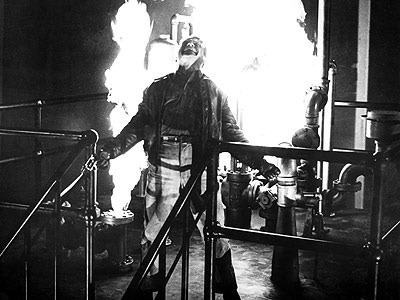
Jim is best remembered for these early hoodlum roles, but he portrayed a wide-array of faces over his career. Often cast as a low-class, wise guy with an eye for the ladies, his role in 'G' Men would help to expand his horizons. Playing the role of a guy from the slums who made right and devoted his life to fighting crime, audiences caught their first glimpse of a character much closer to Jim himself. While he slowly edged away from his bad boy roles in films like Angels with Dirty Faces, he would return with a vengeance in the demented, Oedipal role of Cody Jarrett in White Heat. In between, he delivered performances with great humanity, humor, and color in City for Conquest, West Point Story, and The Oklahoma Kid. He was deeply honored to be able to portray one of his childhood heroes, Lon Chaney, in his biopic The Man of a Thousand Faces-- a title that also described Jim himself. But who was he off screen? His costars would remember him as a giving, devoted, and easy-going guy who wasn't afraid to stand up to a dictatorial director and was equally nurturing of new talents. The friends he had, he kept for life, and new ones knew that they were safe under his wing. He did his part in the war effort, doing radio broadcasts and making tours to support the troops, and as he aged he became more and more devoted to land conservation. His love for the outdoors and nature made it important to him to save the pure patches of green as yet untouched. Politically, he was open-minded, starting out left-wing (and at one point even being accused of membership in the Communist party) only to end up a seasoned conservative along side pal Bob Montgomery. Fluent in Yiddish, he enjoyed tossing in a line here or there in his favorite language, whether among friends or in his films. He too would add little mannerisms into his acting roles that had belonged to his father, which would induce his mother to nostalgic tears. Above all, family came first, and he remained close to his siblings and mother for all his years, even helping sister Jeanne when she began pursuing acting. In his work, he played as long as he could, and when he grew old and tired, it was Willie who pushed him to get back into the ring, where she knew he was happiest. 


As dastardly as some of his characters, Jim too possessed a certain poise and an 
elegance that not only made him attractive to the opposite sex but 
enabled him to pursue more varied roles.

James Cagney... What is there to say? As I sit here, writing and deleting what is certain to be a disjointed memorial, I find it difficult to describe who Jim really was, what he represented, and the legacy he left behind. A cinematic icon, he has been an influential force in the careers of film Gods like Eastwood and Scorsese and has left an indelible imprint on the history of film. Throughout his life, he presented vastly different portraits of what it meant to be an American, and as a man who considered himself a true patriot, this is perhaps the best compliment anyone could pay him. From the gritty realism of his gangster portrayals to his embodiment of the ultimate portrait of liberty in Yankee Doodle Dandy, Jim was both sides of the coin and 100% American tender. In later life, as his health failed, he enjoyed time on his farm (the one he had always dreamed of) and painting. Always a positive person, while he shirked the ballyhoo and public attention, he always remained grateful to his peers for their respect, and befriended many young fans who were curious about the aging icon and his unparalleled career. Jim passed away peacefully and with a wink (literally) on March 30, 1986. Having seen many of his friends go before him and seeing the world of Hollywood change around him, the straight shooter-- who could make no sense of the new "method" style of acting-- felt it was the proper time to take his final bow. He would remember his youthful vaudeville days with Willie as the happiest of his life and the enduring hardships of his youth as the most impactful, but it was his Hollywood years that remain with fans. In those years, he lent us his strength, passion, charisma, and swagger, and showed us that there is no moment in life so brutal that you can't handle it with equal parts guts and grace.

Wednesday, October 26, 2011

Halloween Spooktacular II

A "boo-tiful" Clara Bow gets in the mood for the Holidays.

This year's tasty greeting of chilly tidings from L.A. La Land comes in the form of the Hollywood Ghost. Just as silver screen souls continue to flicker on long after their deaths, so too do movie stars continue to haunt us in our own waking lives. Apparently, even though fate long ago called "cut," the following immortals choose to keep on living, mugging their way through the after-life, and maintaining their scene-stealing ways. Supernatural celebrity sightings have become almost as sought after as the living kind, and with accumulating stories of ghostly encounters piling up, avid fans often make it a point to visit the places their favorite, famous ghouls continue to haunt. Of course, it could all be tommyrot-- myths and legends built up over time in order to keep our idols close to us-- but then the similarities in various accounts are often a bit too startling to ignore. The locales that various celeb spirits continue to haunt is very curious and definitely indicative of who they were in life. Having never come face to face with a spirit, I can only imagine the exciting, frightening adrenaline rush a lucky (or unlucky) witness gets when encountering the eerie remnants of one they have grown to admire. Whether the fear outweighs the awe all depends on the person.


The Homes:


Errol Flynn (right) was referred to as the "Baron of Mulholland" because of his lush pleasure palace (situated at 7740 Mulholland Dr). The stories of his debaucherous parties and shenanigans are legendary. Though many stories of this Tasmanian's deviltry have been grossly over-exaggerated, the architecture of the building definitely suggested his notorious naughty side: from two way mirrors, to a front door that was really the back door, to wall murals with hidden sexual connotations, Errol always had a way of blending his keen aesthetic eye with his boyish sense of humor. But this home was more than a focal point for Hollywood parties-- it was a symbol of Errol's success, the struggles he had overcome, and the familial comforts he always sought but had trouble either finding or accepting as truth. He adored his home, which he filled with his carefully chosen, masculine decor and his beloved Paul Gauguin painting, "Famille Tahitienne." He surrounded himself with things that made him feel safe and secure; things that made him feel at home. Rumor has it that he did too good a job, for future tenants and guests would occasionally catch a glimpse of the mansion's former master.


The most interesting stories of Errol's continued residence ironically include another Hollywood heartthrob, Ricky Nelson, who moved to the address in 1977. Apparently, Ricky was a fan of the notorious lecher, and got a kick out of it when he had encounters with him. He and his family, including daughter Tracy, were constantly experiencing disturbances, such as loud banging sounds and lights turning on by themselves. One night, Tracy arrived home late. Looking toward the house, she happened to see a male figure staring out the dining room window. She thought it was her father, but when she went inside, she discovered that he was not home. When Ricky called not much later, Tracy asked him about the visitor, to which Ricky replied: "Oh, that's just Errol." After Ricky died in a plane crash in 1985, his surviving family drew the conclusion that Errol had been causing these disturbances to warn his roommate of the upcoming danger. Ricky didn't get the message. After Ricky's demise, the presence allegedly got more menacing. Thus far, there has been no word from Justin Timberlake-- who currently owns the property-- if any other odd occurrences have transpired. Since the original structure was demolished after Nelson's ownership and a new structure built, chances are slim that Errol has stuck around.


Ricky Nelson: soul brother of Errol Flynn.


Rudolph Valentino was equally proud of his Benedict Canyon home at 1436 Bella Drive, which he dubbed Falcon Lair (right) in honor of the unfulfilled film project The Hooded Falcon. The house was a grandiose expression of Rudy and wife Natacha Rambova's notorious passions and exotic tastes. The decor ranged from the oriental to the medieval, and the property housed plenty of room for Rudy's horses and dogs. Rudy became a homebody as he matured and preferred sitting at home by the fire to going out on the town. His home gave him the peace and quiet he needed. Of course, after Natacha left him, the house was also inhabited by bitter memories. Rudy's death in 1926 was a sudden, shocking event to fans and perhaps even moreso to himself. Merely thirty-one years-old at his expiration, Rudy still hasn't accepted the fact that he's dead, and there have been multiple accounts of his presence at his once beloved den. He appears most often in his bedroom and in the former stables. He too has given visitors a creep when they see him peering down from a second story window. Doors are also known to open and shut of their own accord. (George Reeves has also been known to saunter through the halls of his "suicide" house at 1579 Benedict Canyon Drive, ironically wearing his Superman costume, which he continues to bear as his own cross).


The Cemetery:

Some too have reported seeing the ghost of Rudolph Valentino at his gravesite at Hollywood Forever Memorial Park's Cathedral Mausoleum. Strangely, he is often reported as wearing his most famous costume: that of the Sheik. And he's not the only one roaming the stones at this cemetery. Some too claim to see the spirit of the infamous "Lady in Black" still visiting his grave site, as she did for several years until her own death. Also, on the edge of the lake, situated under a large tree, is the grave of Virginia Rappe (left)-- the woman notorious for crying "rape" against Fatty Arbuckle at the St. Francis Hotel in 1921, simultaneously ending his career and Hollywood's pristine image. Virginia actually died from what most scholars now agree was the effects of a botched abortion, which Fatty had nothing to do with. Nonetheless, her death was a tragic one, and the sound of her sobbing can often be heard near her gravestone, where she certainly cries for the film career she never had, the loss of her young life, and the baby she killed. Clifton Webb also has been spotted by his grave in the Abbey of the Psalms Mausoleum. Tucked down a claustrophobic corridor, the eternal man of etiquette, best remembered as Mr. Belvedere, lies in a simple plot indiscernible from his neighbors, identified only by his name. Having suffered through a complicated relationship with his mother as well as a lifetime of meticulously hiding his sexuality from the public, his restless spirit continues to hover about his final resting place. More than one visitor to the this section of the mausoleum has spotted a man in a finely tailored suit and a well-cultivated mustache walking toward them from the far wall, only to disappear as he comes too close for comfort. (Marilyn Monroe has also been reported to visit her own grave across town at Westwood Memorial).


Clifton Webb: still making a statement.


The Corner:


The famous intersection of Hollywood and Vine has also strangely been momentarily possessed by Ghosts of Hollywood's past. A bench that used to sit at the Northeast corner of the intersection was often occupied by a presence many identified as Lon Chaney. Chaney often sat at this very spot during his younger days, awaiting the bus to take him to the studios where he fought against the other hungry extras for work. As famous or as wealthy as he became, it was these lean years that always remained with him: painful years one can never fully shake off. In the future, after he had achieved success, he would pass this bench on his way to work and offer other struggling actors a ride. For years after his death, people would claim to spot him sitting at the stop, and in time the bench was even dedicated to him (see right, with son Lon Chaney Jr in top left). However, it was eventually (and unfortunately for fans) removed, and with nowhere to rest his weary bones, Lon has been seen no more. (At least not there... There are also accounts of him showing up in his Phantom garb at Stage 28 at Universal Studios where he filmed his most famous role in The Phantom of the Opera). Bela Lugosi also had an interesting moment at Hollywood and Vine... while on the way to his own funeral. Toward the end of his life, the actor was constantly taking long walks down Hollywood Boulevard, often stopping to chat with local merchants whom he'd come to know on the trek to purchase his beloved cigars. During his funeral procession,when the hearse passed through this intersection on its way to The Holy Cross Cemetery in Culver City, the driver temporarily lost control of the vehicle, and it swerved toward Hollywood-- though this route was not on the agenda. Many believe Bela was hoping to stop for one last stogie. 

Bela while appearing on Broadway as Dracula: both his
greatest friend and foe. He would be buried
in his cape.


The Restaurant:


Thelma Todd is known to prowl around her former Sidewalk Cafe (left), now home to Paulist Productions, at 17575 Pacific Coast Hwy. A cheerful, easy-going gal in life, the "Ice Cream Blonde's" appearances are never menacing, and her apparition is simply observed moving from room to room or perhaps descending the staircase. The garage where she was found dead, slumped behind the wheel of her car above the cafe at 17531 Posetano Road, also continues to experience disquieting quirks. When Thelma's body was discovered, the car's motor was still running, and the death was initially ruled a suicide by carbon monoxide poisoning-- despite the fact that her face had been clearly beaten in. The structure now appears much as it did when Thelma was alive. It was here that she always parked her car before coming down the long steps to her apartment, which was above the cafe. Today, the Posetano address belongs to another owner who-- as last reported-- uses the garage space for storage. Still, some nights, strange sounds emit from the belly of the house, including the faint sound of a motor running. Some have also recounted the scent of exhaust fumes.


The lovely Thelma in a tragic final photo.


The Hotel:


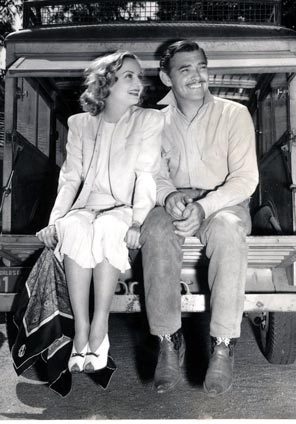
Clark Gable and Carole Lombard are still remembered as one of Hollywood's favorite golden couples (right). Carole's humor served to lighten the serious Gable's mood, and Gable's stubborn, little-boy-lost mentality induced Carole to mature (at least partly) into a loving housewife. They seemed to be made for each other, and enjoyed their blessed but simple life on their Encino ranch. After Carole's life was cut short on January 16, 1942 in a tragic plane crash, Gable was devastated. Many said that he was never the same; the light in his eyes had gone out. He would survive the love of his life by 18 years, which included two other marriages, until he was finally laid to rest beside her at Glendale Forest Lawn in 1960. However, it is not here that the two reside. Many people claim to see the duo continuing to enjoy dinner and cocktails in the lounge of one of their favorite "haunts": The Lady Windemere, now (The Georgian Hotel at 1415 Ocean Ave, Santa Monica). Various employs have entered the lower level restaurant, formerly a speakeasy-- and thus named "The Speakeasy"--after closing, to find it very much still occupied by a beautiful blond and her handsome partner. However, when they announce that serving hours are over, the figures simply disappear into thin air. (At least they know when to make an exit). In addition, the sounds of disembodied gasps, laughs, or voices saying "Good Morning," are often reported. Clark and Carole may not be completely responsible. This hotel was patronized by many, including Bugsy Siegel and Rose Kennedy, and was popular for its beauty parlor and barber shop as well. (The Roosevelt Hotel is also famous for its plethora of ghostly guests, including Monty Clift and his incessant trumpet playing, Marilyn Monroe's primping in her former mirror, and a mysterious presence and cold spot in the Blossom Room-- home to the first Academy Awards celebration).

"The Speakeasy Room" at The Georgian Hotel-- just imagine the happy
couple in the corner booth.


The Inexplicable:


Carole did a little more haunting on her own. While alive, she became close chums with upcoming comedic ingenue Lucille Ball (right). The two had much in common, including incredible beauty mixed with bawdy humor. Lucy, like many, was crushed by the news of Carole's death, and she missed her friend greatly. There were times she wished that she had Carole's ear to confide in. She particularly craved Carole's sage advice to guide her when things got rough and she felt her career slipping away. When the opportunity to do "I Love Lucy" came up, Lucy was skeptical. Television? Should she do it? What if it tanked? What would happen to her career!?!?! Anxious and full of nerves, she went to sleep, wherein she had a dream that Carole paid her a visit and said: "Honey, go for it!" Lucy listened, awoke, and went on to become the most famous television personality in history. Perhaps, in her sleep, her subconscious simply took the form of her beloved friend; but, perhaps Carole sensed a friend in need from the other side and decided to make a special trip and send a helpful message. Lucy too would go on to a future performance as a ghost. She would allegedly haunt her 1000 North Roxbury Drive home on its last day in existence. While the house was being destroyed, a passer-by happened to catch a glimpse of a flaming red-head wandering around the property. She shook her head, pacing, seeming deeply upset at what was being done to her former abode. She then disappeared around the South corner, never to be seen again... except on the boob tube. 

The Theatre:


To cap off her month as L.A. La Land's star, is Olive Thomas's preternatural tale. Olive (left) called The New Amsterdam Theatre in New York home during her years as a Ziegfeld Follies girl. These were very exciting, important years in her life, which is perhaps why-- after her death-- she chooses to return here rather than Hollywood for her occasional visits. Olive has been seen wandering the building, apparently soaking in memories of past times. Sometimes, she is in her typical, jolly mood; other times, she seems overcome with sadness. On rare occasions, she seems peeved and starts a ruckus. One employee recalled making his rounds on the stage when he surprisingly shined his light on a woman dressed in old-fashioned clothing. He thought she had merely gotten locked in, but when he called to her, she simply smiled, blew him a kiss, and disappeared. When he later compared his vision to a photo of Olive Thomas, he grew pale: it was the same girl! Mostly, Olive appears to men, continuing her worldly flirtations with impish grins and friendly greetings, often calling, "Hey, fella!" She once scared a worker away permanently when she appeared and said, "How are you doing, handsome?" His vanity was not flattered. Olive grew anxious when renovations began on the theater, allegedly becoming more vocal and wandering aimlessly in plain sight. She too has a jealous streak. When reunions involving the surviving Ziegfeld girls occur at the theater, Olive causes some serious shaking of the sets and even makes various light bulbs burn out-- simultaneously. She always appears gloriously bedecked, sometimes even wearing a sash that says "Olive," and at other mournful times, she can be spied carrying a champagne glass-- even the spirits indulge in spirits. She too walks in mid air at an area upstairs where the removed glass walkway used to be. To her, it is still there. It appears that the employees who have the courage to stay have grown accustomed to Ollie and her continued performances, often calling out "Good Morning, Olive" when they arrive in the morning and bidding her goodnight when they leave her alone in the dark with nothing but the stage's "ghost light" to keep her company.


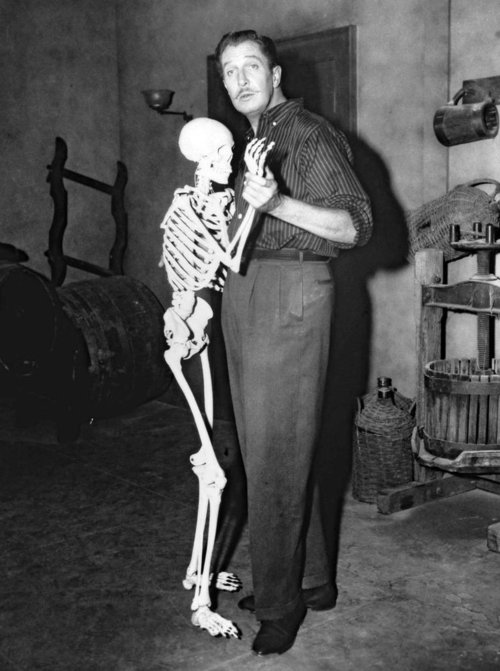
The notoriously spooky Vincent Price lightens the mood with a bit of
dancing while filming The House on Haunted Hill.


In life, nothing is black and white. Does it not, therefore, make sense that there is not simply life and death? That there is a strange shade of gray that serves as a home for those who cannot choose a side? Our Gods and Goddesses of black and white movies seem to think so. Just as on the silver screen, they flicker on, continuing their intangible but effective presence in the world of us normal, living souls. Perhaps, to them, we are putting on the show as they exist behind the scenes, watching and observing, enjoying entertaining passion plays performed by those so unaware. Or maybe they simply continue on as if they never left, soaking in their happiest or most profound personal moments, unable to let go and unaware that they already have. Then, there are those who seem compelled to ham it up, to penetrate that thin screen between actor and passive audience, and jump out and say "Boo! I'm still here." Attention-hungry fame hounds are never satiated. Are our film players still playing with us? Putting on a show for their own amusement? Or are they simply lost and unable to make their final exit? Maybe it would be easier for them to bid farewell if we let go of them. As it is, we continue to be enamoured, hypnotized, and equally haunted by the stars who touch our lives, even after their own have ended. As we invoke their spirits every time we pop in a DVD, it should come as no surprise that they remain close to us. Until we ask them to go, they really have no reason to depart.