FYI

Don't forget to refer to my Contents page for a more convenient reference to past articles.

For More L.A. La Land, visit my writing/art/film appreciation site on Facebook at Quoth the Maven and follow me on Twitter @ Blahlaland. :)

Friday, June 25, 2010

CAST-AWAYS: Part Four


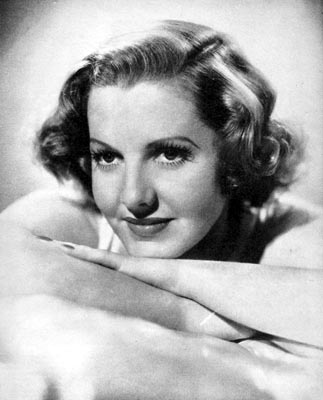
In this edition of classic casting decisions, it's all about Jean. Jean Arthur was an interesting actress for many reasons. Her quirkiness was what made her so unique on film, yet so unadaptable in reality. She struggled for many years to find her place in celluloid splendor, but once she was tapped by Frank Capra, her career would be forever changed for the better. The days of B-movie Westerns and flat, uninteresting supporting roles were behind her. With her new star status-- after films like Easy Living and You Can't Take It with You-- came more clout. Jean was never a pushover when it came to her work, but she definitely became more choosy and particular about the films she took on as the years went by. This didn't necessarily mean that she had her pick of any film she wanted. In fact, just as Jean spent her career running from the roles she did NOT want to play, so too would she chase a few gems that seemed to evade her.

The most famous example of this is Gone with the Wind. Believe it or not, Jean was one of the final four in the running for the role of Scarlett O'Hara. This may seem like the most awkward interpretation of the feisty southern belle possible, but Jean had an ace in the hole: David O. Selznick. The two had been lovers prior to his marriage to Irene Mayer, LB's daughter, and Selznick was one of the first people in Jean's life to see some real potential in her. Though their relationship did not work out, David could still attest to the fact that she was a superb actress who had a surprising fire within her, despite her nervous exteriors. It is more probable that Jean approached him about playing the coveted role than vice versa, but it is clear Jean wanted the part badly. While Viven Leigh would later recall that when she put on the wardrobe for the screen test, it was still warm from the last actress, Jean Arthur would wear her own gowns, which she had had specially commissioned. When she learned at Christmas in 1938 that Viv had snagged the role from her and the other finalists-- Paulette Goddard and Joan Bennett-- Jean was so upset that she reportedly burned the negative of her audition!!!

Of course, we all can see that it worked out in the end. Jean's peculiar nature made her stand out from the crowd, which would have made her a good candidate for the saucy southerner, and her looks, which were very handsome but not drop dead gorgeous like Vivien Leigh, would have made her more physically comparable to the written character from Margaret Mitchell's novel, (in which Scarlett was described as "not beautiful"). Her passion and strength were also on par with the written Scarlett, as well as her youthfulness... But she was lacking something that Viv possessed. Perhaps it was more of an outright sexuality. Coquettishness, narcissism, and even a bit of vindictivness were needed in the character. These were things Viv saw and infused into her interpretation, which landed her the coveted role. Selznick made the right decision, for today, you can't imagine anyone else surrounded by that batch of beau at the Twelve Oaks picnic, nor can you imagine Rhett Butler lusting after any other lady.


1939 turned out to be a doubly sour year for Jean. Not only did she miss out on and then have to witness all the hubbub for GWTW, but she then lost another role that she really wanted: Lorna Moon in Golden Boy. Since Jean's talent and technique had been honed on the theatrical stage, it is no wonder that she jumped at the chance of working on Clifford Odets's smash hit when she learned that it was going to be adapted for the screen. Initially, it would seem that the tragic Frances Farmer (right), who had established the role in New York when it premiered, would be offered the role. Unfortunately, a falling out between her and the rest of the company, allegedly because of an affair that she had had with Odets, took her out of the running long before it was even in pre-production. Jean had high hopes but was eventually disappointed when the part went to Barbara Stanwyck instead of herself. 

Though Jean may have been bitter at the time, she could not help but admit, especially later in life, that Babs (left with Golden Boy co-star William Holden) was one Hell of a lady. In fact, when the two were filming their separate television shows, "The Jean Arthur Show" and "The Big Valley," which were in competitive time slots, Jean would stop over to check out the "Valley" set and witness the continued diligence and professionalism of Stanwyck, whom she considered a class act. Barbara was still doing stunts, working all day in top form, dealing with publicity and reporters, and all while succumbing to the effects of emphysema. Certainly, even Jean could concede that Barbara's interpretations and performances throughout her career were something to behold, including her screen steal in Golden Boy.

Of course, Jean was not innocent of the occasional screen-grab either. While many of her greatest successes came from working with Frank Capra, who later considered her his favorite actress, none of the roles she played in his films were shoe-ins. When Capra was casting for his big, break-through movie, Mr Deeds Goes to Town, his leading lady was to be Carole Lombard. Yet another screwball queen, Carole seemed to be perfect for the role of the snappy and jaded Babe Bennett. Carole had worked with Gary Cooper, a former lover, in the film Now and Forever a couple years before, and the two had very believable on-screen chemistry. However, as fate would have it, Carole turned down the role to perform in one of the best films of her career, My Man Godfrey, as Irene Bullock (above with William Powell). She would be nominated for an Academy Award for her performance. Once she was out of the running, Capra was on a quest for a new woman to play the sarcastic newspaperwoman with a heart of gold. Enter Jean. 


Rumor has it that Capra was looking in vain for his leading lady when he happened to step into a screening room that was playing one of Jean's latest films. Immediately, he knew that he had found a diamond in the rough! However, the truth is that she may just have been the next actress on the list at Columbia Pictures. However they found each other, the movie they made was magic. Jean was able to portray just the correct amounts of tough and tender, proving the perfect foil for Gary's Longfellow Deeds, and representing the hardened modern woman whose heart could still be melted by the right man. The movie was such a runaway success that Capra tried to recreate the chemistry for Mr. Smith Goes to Washington. However, this time it would be Coop who would turn down the role of the young senator, leaving the pathway open for Jimmy Stewart. Looking back, it is clear that Capra was very influential in taking the careers of both Jean Arthur and Jimmy Stewart from a simmer to a boil!

Jean and Jimmy discuss politics
 in Mr. Smith Goes to Washington

Jean and Jimmy had worked together previously in Capra's You Can't Take It with You. It was their easy onscreen camaraderie and adorable natures that made them believable as lovers tormented by their conflicting families. Their attraction was equally palpable for the camera, and some say that-- at least on Jean's side-- it was not feigned. You Can't Take It with You was one of Jimmy's biggest films up to that point, and all the girls on the set developed crushes on him. However, it was not always Jean who was set to be his co-star. For a time, it looked like Alice Sycamore would be played by Olivia De Havilland (left), who coincidentally would become romantically involved with Stewart not long after. However, Olivia was working for Jack Warner over at Warner Bros, and he was not about to loan out one of his biggest stars to a rival studio! Thus, Jean and Stewart were left to make the magic together. You Can't Take It with You won over the hearts of its audiences as well as the Academy Award for best picture that year.

Together again, J&J make history in YCTIWY...
(though this was filmed before Mr. Smith)

Through hard work and a little bit of luck, Jean was able to create for herself an unparalleled career, starring in an almost unstoppable string of hits. Say what you will of the lady in person, before the camera, she was a goddess. When you talk about the biggest movies from the 30s and 40s, her name comes up time and again. In her case, it seems that casting was not quite as significant as it was for others, since she elevated every film she was in, dedicating herself to making multilayered and intriguing personalities that shaped the face of cinema forever.

Thursday, June 17, 2010

TAKE ONE, TWO, THREE: 2 Many Spouses


After watching 5, 10... 20,000 movies, you start to realize that certain themes and stories seem to repeat themselves. This goes beyond "boy meets girl," "coming of age," or "slasher" franchise films. These old, tried, and true plots always seem to pull an audience, but there are also very specific story-lines that have been recycled and rehashed over the years, though sometimes their roots are so distant that we don't realize we are watching a remake. Or a remake of a remake. Or a re-envisioning of a remade remake. Hence, the new L.A. La Land segment, "Take One, Two, Three..."

 
~     ~     ~

During my research of the always stellar Ms. Jean Arthur, I watched the very enjoyable film Too Many Husbands of 1940. The premise of the film is as follows: A year ago, Vicky (Jean) was married to Bill Cardew (Fred MacMurray), but Bill went missing while on a dangerous expedition for work. He was assumed drowned and declared dead. Vicky took comfort in Bill's long-suffering best friend Henry Lowndes (Melvyn Douglas), whom she married. Now, Bill is back, having magically survived all this time on a desert island, and he comes home to find his beloved married to his ex-BFF! Who will Vicky choose? Which man does she truly love the most?


The movie is one of Jean's lesser remembered efforts, though it is very entertaining to watch the two grown men become whimpering babies and compete for a very enthusiastic woman's affection. The story, based on a W. Somerset Maugham play and written for the screen by Claude Binyon would be tried a few times more, with different directors, writers, and actors, but in the future, there would be a slight alteration to the plot: it is the wife who is shipwrecked, and the husband who has just remarried when the past shows up at his front door. As far as I know, this new slant has been done at least three times, the first of which was a mere two months after Too Many Husbands was released! Seems like a rival studio smelled a winning concept...

1) My Favorite Wife

 This adorable gem was released in May of 1940 and remains better remembered than its two month senior because of the performance of comedy duo Cary Grant and Irene Dunne. One of the greatest screwball queens, Dunne shines in her role as the quirky, martyred wife--Ellen Arden-- who returns home after 7 years to discover that her husband, Nick, has just wed Bianca Bates (Gail Patrick). Cary, as always, plays "perfectly perplexed" like nobody's business-- (was there ever a handsomer buffoon)??? Another log is thrown on the very confusing fire when Nick, at first elated to find his dead wife alive, discovers that she had been living on her distant island with another survivor, who just happens to be the incredibly handsome Steve Burkett (Randolph Scott). The expected jealousies, misunderstandings, and conniving ensue, but in the end, a decision has to be made and a true wife chosen.

 Cary sizes up the competition...

The major difference from Too Many Husbands, other than the sex change, is that MFW is both safer and funnier. With the rice still on Nick's tux, the audience is led to believe that he and Bianca's union is unconsummated, thus they have not been accidentally living in sin for the past seven years-- unlike Jean Arthur's character, who got to wed and bed two different men all within 1 year. Secondly, Jean thoroughly enjoys her predicament, and gloats while her two hubbies lobby for her affections and woo her like school boys. This made Husbands a little more interesting, but Wife, written ironically by Arthur's good friend Garson Kanin, is much more clownish. The characterizations and plot points are more intricate, including the fact that Ellen is coming back home to not only her husband but her children as well. The resulting movie becomes more about a wife's well-formed knowledge of her husband, which gives her the upper hand in the ensuing shenanigans, than about her trying to foolishly win him back. Re-teamed with each other after The Awful Truth of 1937, Grant and Dunne work well together and are very believable as two squabbling soulmates who, argue as they might, know that they could never truly belong to anyone else. In their capable and uproarious hands, the film becomes about marriage, family, and true love, and less about the crazy situation surrounding it all. Perhaps the fact that the chemistry on the set of Husbands was dead in the water is what denied it its resonance with the public, while MFW was a runaway hit!

2) Something's Got to Give

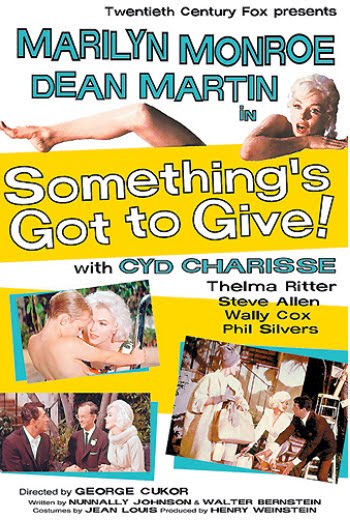
 Over twenty years after My Favorite Wife, this film was chosen as a perfect vehicle for Marilyn Monroe, who was looking to make a personal and professional comeback after the Kennedy humiliation and her failed passion project with husband Arthur Miller, The Misfits, (which wouldn't be recognized as a classic until years later). The plot is the same as above, with Marilyn stepping into Irene's shoes as Ellen and Dean Martin playing husband Nick. Cyd Charisse is cast as the ill-fated newlywed, Bianca, who doesn't stand a chance against the first Mrs. Arden. Sadly, the film was never completed due to Marilyn's untimely death, but the surviving footage of her swimming naked in the pool made it into the mainstream, and with the rest of the surviving footage, as well as Marilyn's cinematic reputation, it is safe to assume that this version would have had a much sexier vibe. (Irene definitely did not go skinny dipping in the 1940 film)!

Since SGG remains incomplete, it is difficult to really judge it, but My Favorite Wife seems to be a superior film. The charming Charisse is no match in her characterization for the always superbly bitchy Gail Patrick, and Dean and Marilyn lack the chemistry of Grant and Dunne, but the later film still has its merits. Though George Cukor was annoyed on set at the presence of Paula Strasberg and Marilyn's childlike dependence on her, the camera cannot deny that there is a depth in Ms. Monroe's performance that was lacking in many of her earlier films. The scene where is she reunited with her oblivious children is a sweet and adorable moment in itself. In addition, she looks better than ever, having shed some weight and nursed herself back to her sexy self after a painful miscarriage and a divorce from Miller. Dean is boyishly funny, as per usual, but without a finished product, we'll never know if this one matched the class of the original. It remains infamous today for the fact that it was Marilyn's last film, and seeing it with the documentary Marilyn Monroe: The Final Days is heartbreaking to say the least. I think it is safe to assume that the back story of the shoot, where Marilyn's erratic behavior irked even the mellow mannered Dean Martin, is more intriguing than the film itself would have been.

After the failure of Something's Got to Give, studio heads were not deterred. Just because they couldn't get lightning to strike twice in the same place, didn't mean that the third time couldn't be the charm...

3) Move Over Darling

Enter Doris Day. If anyone could bring a little sunshine and life back into a dead script, it would be the reigning Queen of Cheer. One year after SGG came to a sad and screeching halt, writers Bella and Sam Spewack revamped their 1962 script for 1963, this time making alterations to create a vehicle for Day and James Garner. Bianca would be played by Polly Bergen this time around, and comedy genius Don Knotts would add a little flavor as the shoe salesman that Day, as the eternal Ellen Arden, tries to bribe into standing in as the man she spent her time on the island with. (The role was played by Wally Cox in SGG and Chester Clute in MFW). Of course, the real Stephen Burkett, who enrages Nick's jealousy, is played by the much more muscled Chuck Conners. The movie was a success, becoming the 6th biggest moneymaker of that year, and there was even a great little homage to My Favorite Wife in the scene where Eve gives Bianca a massage and describes a classic old movie.

Just as the story was altered for Marilyn, so it was for Doris, and her zany physical comedy was put to the test. She, of course, passed at every turn, even when it resulted in injury (Garner accidentally broke two of her ribs in the aforementioned massage scene) and embarrassment (Doris drives through the car wash with the top down, emerging like a wet poodle). Her ease and self-effacing nature made her a good sport in the film and provided a fresh take on the original story. In her own way, she was able to capture the original humor that Dunne introduced, though Doris definitely enjoys hamming it up, while Dunne was more about subtlety. Move Over Darling's supporting cast was also strong, including an appearance by everyone's favorite character actress, Thelma Ritter, and a humorous and charming turn by the flabbergasted Garner.

Whichever version you like the best, all three present the same theme of reawakened passion. The truest lovers, separated by years of longing, are reunited only to fall in love with each other even more than before. What was torn asunder by happenstance is mended by undying devotion, though there are several hoops and stumbling blocks along the way. I stand by the original, as I do in most instances, for where would any of the other films be without it? While each piece offers its own take, and it is interesting to see how the story mutates in different hands and communicates different ideas, you can't top that Dunne-Grant spark!

If the story were made today, it would make a very different film. Since we no longer live in the (hypothetical) Age of Innocence, the returned wife stopping at nothing to keep her husband from the bridal bed would not be quite as intense a mission. Still, maybe we will see it again someday and laugh our heinies off at an oldie but a goody-- a different spin, for a new generation.

Wednesday, June 9, 2010

MENTAL MONTAGE: Accidentally on Purpose


Certain movie moments stick with you. Whether it be one Hell of a line-- "I don't have to show you any stinking badges!"-- or a devastating shot-- Rhett carrying Scarlett up that staircase-- these pieces of cinematic splendor become permanent fixtures in our consciousness. The Mona Lisa, the Leaning Tower of Pisa, John Wayne... They belong to all of us, as familiar as the back of one's hand. 

When a memorable incident of film occurs unexpectedly in a spur-of-the-moment improvisation, it makes the event even more special; as if it were an act of God. When an actor is so deeply invested in his character that he can bring forth an unwritten truth, or when someone makes a flub that just so happens to be filmic kismet, we are all given the sweet gift of accidental movie magic. Here are some examples:

Acting genius often goes unrecognized, because those that are really, really good at what they do make it look easy. Jean Arthur (left) is a prime example of this: a woman who took her profession so seriously that it made her often physically ill. But there was more to Jean than the reiteration of lines and the fluttering of eyelids. She went beyond the script to inject her performances with little bits of business that made her characters truly unique and much more than the typical "Gal Friday." One entertaining example came when George Stevens caught Jean playing around in front of the mirror in The Talk of the Town. That hilarious and embarrassing moment when Ronald Colman walks in on her in her bedroom, dragging her hair over her face à la Veronica Lake and repeating "Lovelay... Lovelay" in a Kate Hepburn drawl was not originally in the script. However, it was added when Stevens saw that such an awkward and vulnerable moment would help to instigate the attraction between the two characters, which in turn would fan the flame of the love triangle between Arthur, Colman, and Cary Grant in the film. A few seconds of Jean's uncanny oddness, and cinematic gold was found!

Lightning struck twice for Jean, but the next time was with co-star Joel McCrea in The More the Merrier. The beautiful and sexy moment that the two share on the front stoop (below) after a dinner date was also not officially planned. The words were all there on the page, but the performance was missing. Joel and Jean got together before they began shooting and decided to raise the stakes. Instead of the usual romantic tension, they  kicked it up a notch, lacing the scene with unspoken desire and uncontrollable attraction. Or, as Joel put it, he got to "cop a feel." As Jean continues her dialogue as written, Joel kisses her neck and puts his arms around her, intermittently distracting her from the conversation as she tries to deny her surmounting arousal. Finally, their lips meet. It is pure poetry, and one more perfect scene out of one of the most perfect of romantic comedies.


In some situations, there is a conspiracy between actors or director and crew to play a joke on an unsuspecting victim, juuuuuust to see how it plays out on film. Most don't expect the captured image to see the light of day, but every once in awhile, the result is so phenomenal that it becomes legendary. One such instance is in Roman Holiday, Audrey Hepburn's first film, in which she won over the American Heart as well as the Academy Award. When she and Gregory Peck approach the "Mouth of Truth" (La Bocca della VeritÃ, below ), Greg and director William Wyler decided to play a prank on the ingenue. Instead of the planned scene, in which Greg would nervously put his hand in the lion's den and remove it unscathed, Wyler instructed him to pretend to be in mortal danger. So, Greg put his hand into the mouth and began screaming in agony, trying unsuccessfully to free himself! Terrified, Audrey grabbed at her co-star, tugging and pulling in attempts to release him. To her dismay, Greg's arm finally emerged from the hole, but his hand was gone! He then popped it out of his sleeve and, smiling mischievously, offered it to her in a shake. Thankfully, the sweethearted girl was a good sport, and they laughed it up. Wyler loved it so much, he decided to keep it in the film. Whether or not the moment we see today is the initial event, or they just liked the idea so much that they decided to film it a few times more, I don't know. But it remains a classic choice!


Another trick was played when James Cagney and director William Wellman decided to spice things up in the big breakfast scene in The Public Enemy. It involved a "morning after" conversation (right), where current squeeze Kitty (Mae Clarke) tries to endear herself emotionally to the dastardly gangster, Tom Powers, who clearly only wants her physically. After Tom yells at Kitty for sticking her nose into his personal business, Cagney was supposed to simply storm off. Instead, he picked up that now iconic grapefruit and smashed it into Mae's face! An extra bit of sadism, it contributed to the heartless menace of Tom Powers. The simple action spoke volumes about his character and the menace of the mobster lifestyle. Audiences were shocked by the brutality! However, there was at least one person guffawing in the theaters among the gasps. While Mae was not happy-- as she was suffering from a cold and a sore nose during the scene-- her husband,  Lew Brice, found the shot of his spouse getting a face-full of fruit absolutely hysterical, and he went to see the movie multiple times for that specific reason. (The idea was inspired by the gangster Hymie Weiss, who had used an omelet in place of a grapfruit on his own moll).

The aforementioned were all accidents, but "planned" accidents if you will. Sometimes, the moments that are caught on camera catch everyone off guard, including the next tidbit. When filming Citizen Kane, every one involved knew that it was groundbreaking and vastly different from the other films being made, but no one ever expected it to become the classic it is hailed as today. For the time being, it was just a group of friends supporting Orson Welles in his passion project. Joseph Cotten had been pals with Orson (both pictured below) for years and was a member of his Mercury Theater troupe. He was happy to sign on to play the part of Jedidiah Leland, who remained the voice of reason and conscience when Welles's Kane starts to go off the deep end. However, it was Cotten who lost his composure during one pivotal scene. After Kane loses his bid for governor, Leland-- sensing his old pal's dissent into greed and delusion-- asks to be sent to Chicago to do dramatic criticism. During rehearsals, Cotten had accidentally flubbed his lines saying "dramatic crimiticism," which worked perfectly in showing that his character was thoroughly inebriated. Orson loved it so much, he had Joe repeat it for the film. It added just that extra something to make the scene more believable, and the moment of comedy also served to cut the tension. Cotten was hailed for his performance, which was enhanced further by the fact that he had stayed awake 24 hours prior to the shoot. It made Leland look like even more of a mess! When he utters that line, you can still catch a smirk on the thoroughly entertained Orson's face.


And, in a finale, let's take a look at some of the one liners that have made movie history:

In Saturday Night Fever, John Travolta became a full-fledged movie star. The disco movie seems cheesy today to the un-informed, but the actual film is full of dark undertones and the resulting generational angst of the masculine search for identity. Though John is remembered for his dance moves, it was his performance as the cocky and oblivious Italian, Tony Manero, that is the true marvel. He proved his commitment to his character in yet another meal scene, this time where it is father and son fighting. When Tony's dad goes to swat him one, Tony, unexpectedly barks back, "Hey, hey, watch the hair!" The revelation of male vanity was totally in sync with the rest of the film, and the line made it into the American mainstream. It is still uttered today in jest, though few even know its true origin!

In Midnight Cowboy, Dustin Hoffman and Jon Voigt had to not only perform in emotionally and psychologically draining scenes, but they also had to put themselves in physical peril! When Ratso and Joe Buck cross a busy intersection of NYC, they were literally doing so. It was not staged, the cars and drivers weren't extras, and there were not cops to direct traffic flow. They were forced to carry out the scene as written several times, come Hell or high water, while director John Schlesinger sat safely with camera and crew on the other side of the street. Dustin, whose walk was further impaired by the pebble he had put in his shoe to exacerbate his character's limp, was in fear for his life. Thus, when a car nearly ran him and Jon over, he slammed his hand on the hood and screamed, "Hey! I'm walkin' here!!!" Today, even those who haven't seen the film know that line.

Jaws is a marvel of a film for several reasons, but then Steven Spielberg is famous for his unique ability to take the most absurd and outlandish situations and make them real. A movie about a killer shark? Really??? But it worked, and it terrifies audiences to this day. For the majority of the film, the finned villain exists only in the viewers' imagination, which is why, when he finally reveals himself, it comes as such a shock. At a test screening, Spielberg was downright proud at the gasps and screams he heard! For this reason, he got a little cocky, and decided to insert another scene to give viewers a thrill. The moment when Richard Dreyfuss finds the human head underwater was thus added, but the director later remarked that this initial shock took away from the later terror of seeing the oceanic beast. Thankfully, he had Roy Scheider to maintain that scene's magic. As if the look on Roy's face wasn't enough of a reaction when he saw the humongous shark come zipping out of the water for the first time, he calmly turned to his costar Robert Shaw aka Sam Quint and said: "You're gonna need a bigger boat." Steven loved it, and the quote stayed.

But perhaps the best improv of all time, and the one that speaks volumes (haha) about movies in general, came from the first "official" sound film: The Jazz Singer. Showman Al Jolson (below) was known for being a bit of a ham, but that extra pomp and swagger was just what was needed to woo audiences into a new era of film-- one they could hear as well as see. The entire film wasn't in sound, but the songs were, as well as the small bits of dialogue that preceded or followed. As Al was performing one of these ditties, he felt the energy he was creating and tapped into the significance of the moment and his part of it. Flying on the power of his own adrenaline, he decided to take an already huge cinematic moment and make it eternal. After performing "Dirty Hands, Dirty Face," Al threw in a line from his theater act: "You ain't heard nothin' yet!" Boy was he right, and audiences were primed for what movies had in store for them in the years to come! 


Over eighty years later, we still remain riveted and-- every once in awhile-- completely blown away by the power of movies and the directors and stars that have given them a place in our hearts.

Thursday, June 3, 2010

STAR OF THE MONTH: Jean Arthur


Well, it's time for a new month and a new starlet to adore. To kick things off this summer, I have selected the lovely and talented Jean Arthur. But be prepared, this lady isn't all that she seems...


Jean Arthur was a pip! From her shrill yet adorable little voice to her feisty and perplexing behavior, you never knew what this woman would do or say next. In fact, neither did she! Spending her life in a fog of confusion, Jean never understood how or where she fit into this whole Goddarned mess of a world, and she was too insecure to try. Instead, she turned to acting, where a script could tell her exactly who she was, where she was, and what she was supposed to do. Only in the camera's gaze or on the sturdy boards of the theatrical stage did she find peace. Those moments between "action" and "cut" were the most secure and comforting of her life. Unfortunately, the boundless time between "cut" and the next call to "action" were emotionally back-breaking, fearful, nervous, and sometimes downright dangerous.


From Easy Living

A naturally insecure individual, Jean has been labeled as the poster girl for the "inferiority complex." Perhaps this attitude came as a repercussion to her father's abandonment of her, her mother, and her two elder brothers. Hubert Greene, her dad, was always coming and going and thus always breaking her heart. Jean had to learn to fend for herself at a young age, but with her hell-bent and determined attitude to never, EVER be hurt by another human being again, came a profound mistrust and an abysmally low sense of self-worth. The internal tug-of-war constantly raging within her would produce a profoundly confounding individual that no one could figure out. At once brave, cynical, and stubborn, Jean too was meek, soft, and childish. For example, before scenes on Mr. Deeds Goes to Town, it is rumored that Jean could be found in her dressing room vomiting. Getting her onto set, on any of her films, was a chore. She never thought she looked right, she was never ready emotionally... She had to be coaxed and soothed onto set, which perturbed many an actor, director, or crew member that had to work with her. When she made it into the spotlight though, boy oh boy! Jean Arthur, the fretful, worrisome, "difficult" actress did not exist. Only a lovable girl armed with smarts and full of heart remained. 

Jean, trying not to scream, in a 
rare cheesecake photo

When in the hands of directors Frank Capra or George Stevens, she was captured best. Opposite the most handsome leading men of the day-- Cary Grant, Gary Cooper, John Wayne-- she still steals the show. The thing is, Jean didn't want to be captured or stolen. Or trapped! She loved liberty above all, and spoke to a generation of women who were still struggling to find their own voice and independence. It seems that squeaky Jean spoke for them as well. Jean's talent was a source of this liberation, but also a burden. As at home as she was on the stage, she was equally tormented by a fear of failure. The more success she gained, the more she believed that it would all crumble out from under her. This explains the erratic behavior in her later years, where she started several plays only to walk out on them before their run was up. "Peter Pan," "Joan of Arc," "Born Yesterday..." Her fear of rejection caused her to reject herself. Needlessly so.


When you watch her movies today, there is but one word: adorable. Even if this woman-- who was a competitor with Garbo for the Elusive Queen of Hollywood-- never believed herself to be so. In fact, she fled the paparazzi flashes as much as she sought the film cameras. This winner of the "Sour Apple Award" may have left a bad taste in the mouths of many in the industry, but to her fans she was always a savory peach! She remains indefinable and untouchable. A mystery, an enigma, a question left unanswered. What she is is what she always set out to be-- one hell of an actress! Mr. Smith Goes to Washington, The More the Merrier, The Talk of the Town, Shane, You Can't Take It with You--- all classic films starring one classic dame. An unparalleled career; a devoted talent. Despite her, you gotta love her: Jean Arthur.

Wednesday, May 26, 2010

CAST-AWAYS: Part Three


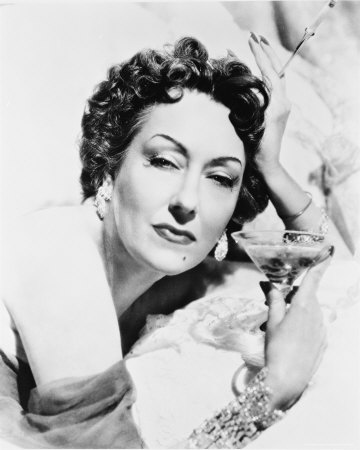
Casting the pivotal role of Norma Desmond in the noir masterpiece Sunset Boulevard was no easy task. What Billy Wilder and the rest of pre-production knew was that they needed a woman who could play, not only a former actress, but a symbol of all that Hollywood represented-- at its best and at its worst. Norma had to be over the top-- the classic diva who had fallen under the spell of her own delusions-- but she also had to carry within her a torrent of pain. The performer would likewise have to be brave enough to go before the camera, warts and all, and show the world the remaining carcass of a once proud beauty. Though far from decrepit, for the latter reason, Mae West (left) turned the role down. She had a rep to protect after all!


Mae may have seemed like a shoe-in, living in her own "Miss Havisham"-like palace at the Ravenswood Apartments where, in her land of pink and white satin, time indeed seemed to stand still. Mae had no qualms about showing her self-love and pride in her work, which could have transferred over well into a character who still sat around watching her old movies. But therein, the comparisons stopped. Mae's sole purpose in life was to bring joy and laughter to her audiences. Thus, playing a broken down, has-been turned  murderess was definitely out! Mae also would not have liked the idea of playing such a raw and emotionally dependent heroine; her ladies were tough as nails and knew there were plenty of Joe Gillises in the sea. So, the part more appropriately went to the incomparable Gloria Swanson (right), who threw herself so ferociously into the role of the silent film spider-woman that people would forever confuse her with the character. No shrinking violet, Gloria wasn't afraid to be dark and dangerous, and her unapologetic portrayal of the disturbed and love ridden femme fatale provided a remarkable bookend to a sterling career and, some say, the first era of film.


Mae's stamp still remained on the finished product, however, even if only in a small way. It turns out that she inspired the presence of Norma's pet chimp and thus the brilliant references in the film to Joe Gillis as Norma's monkey. Mae herself had a monkey, (as well as a house boy, if you refer to her companion Paul Novak as such), and Wilder found the inspiration too good to pass by. Who can imagine Sunset now without that fantastic monkey funeral???

Joan as the ultimate Mommie Dearest alongside Ann Blyth

Speaking of Noir... The classic Warner Bros. film Mildred Pierce rejuvenated an anxious Joan Crawford's dwindling career. After making the switch from MGM, Joan failed to impress at the box office, and the grand Madame feared that her days as a leading lady were numbered. When she heard of this vehicle, she lobbied hard for it, thinking it was a magnificent role and one that would put her back on top. Her stubborn elbowing and arm twisting eventually got her way, and her hard work and nuanced portrayal of a martyred mother won her the Academy Award. She was not always a shoe-in, however. When negotiations between her and the studio broke down before filming, the role was offered to another leading lady, Ann Sheridan (below), but she turned the role down. Had Ann said, "I do," it would have made for a very different film, for the laid-back, country girl was a far cry from the hell-bent and ambitious Joan. In the end, Ann didn't feel the part was right for her. Mostly, she was terrified of the daughter character, Veda, whom she deemed too horrible to be believed! No matter. She went on to make her own film noir, Nora Prentiss, two years later.


While Joan won the Mildred victory, she did lose a few here and there. She very nearly became the woman forever making love to Burt Lancaster on the beach in From Here to Eternity, but in the end those waves came crashing down on the refined, English actress, Deborah Kerr (left). Joan had caused too much of a ruckus by insisting that the film be shot with her preferred cameraman, and the studio heads finally put their foot down. Instead, they turned to Kerr, who would be playing against type in the role of Karen Holmes, the adulterous army wife. The casting gamble worked, for the fact that Kerr didn't quite fit in with her surroundings made her portrayal of the disgruntled and unhappy woman ill at ease with her place in life all the more compelling. The movie helped to crush her good-girl image and opened up more varied roles in her future.

The Eternal Beach Scene


 When Bette Davis (left)was first offered the role of Margo Channing in All About Eve, she thought it was a joke. Darryl F. Zanuck put in the call to Davis himself, but because the two had an ongoing feud and had not spoken in years, Bette thought the call was a prank from a friend. She played along, mhmm-ing and uh-huh-ing with an eye-roll, until it slowly dawned on her that she was indeed speaking to Zanuck! In shock, her tone changed completely. She agreed to read the script, which she adored, and said "Yes, yes, yes" to the role. 

By coming on board, Bette saved the picture, which had been put on hiatus because of the failure to secure the lead. Zanuck had at first wanted Marlene Dietrich, but director Joseph L. Mankiewicz didn't feel that she was right for the aging Margo. After all, Marlene did not age. Instead, he put his confidence behind the fabulous Claudette Colbert (right), who was thrilled to be offered the part. However, a back injury took her out of the running, although losing the part probably hurt more. In any case, every director under the sun warned Mankiewicz not to work with Bette, claiming that she was the most difficult of all film divas. Only William Wyler congratulated him on his coup, having worked with Bette on films like The Little Foxes. She was, he insisted, the ultimate pro. Wyler had it right, for Joe and Bette hit it off and had perfect chemistry on the set. Little ideas like giving Bette the container of chocolates to play with in the big party scene added even more layers to her incredible performance. Bette credited Joe with revamping her career. I guess it takes a genius to know one.

Ah, the magic of perfect casting...

Wednesday, May 19, 2010

MENTAL MONTAGE: Star Search


After one has been working in the industry for awhile, it only makes sense that he or she develop a knack for spotting other hopefuls who may have what it takes to find fame and fortune. Many actors and actresses are noteworthy for the selfless and helpful natures that from time to time compelled them to lend a hand to struggling hopefuls trying to make it in La La Land. I guess if you have that special X-factor, it gives you the ability to see it in others. Here are some examples of Stars finding Stars, or at least Stars predicting bright futures for some unsuspecting diamonds in the rough...


 May's lady, Ms. West, knew a thing or two about quality. She also knew a thing or two about men. There would be many times in her career when she would give a leg-up to a performer if she thought he or she had talent, but she is most notorious for finding the gentlemen gems that she cast in her films. For example, she boosted an already seasoned Randolph Scott's career when she cast him in Go West Young Man. She nicknamed the handsome actor "Randy," because she "could tell he was." (Haha). 


Most memorably, however, Mae made a movie star of Cary Grant. Some rumors remember Mae as discovering Cary when he was kicking up stones outside the Paramount gate, hoping to be chosen as an extra for a current shoot. This isn't completely accurate. Cary had already made several films with substantial-- albeit not breakthrough-- roles in films opposite the likes of Marlene Dietrich (in Blonde Venus). Thus, by the time Mae found him, he wasn't exactly on the extra market anymore. In truth, to Mae's own recollection, she heard Cary before she saw him. The uncanny accent reached her ears as she was sitting in her dressing room. Quite curious about the source of such a booming and almost regal sounding voice, Mae looked down from her window and saw Mr. Grant, finding his looks even more charming than his playful pipes. She decided then and there that she MUST have him in her new picture, and first starring vehicle, She Done Him Wrong. She did him right, because it was this film that shot Cary to super-stardom.

Both of Mae's finds became chums later.


When the saucy Norma Shearer retired from MGM, she lost none of her leading lady luster.Widowed after the death of Irving Thalberg, she took up with a ski instructor, and younger man, Martin Arrouge, solidifying her wildcat reputation long before "Cougars" were the rage. It was actually while staying at a ski lodge that she happened to notice a photograph of a lovely, young girl sitting at the reception desk. Norma recognized the unknown beauty as a star-in-the-making, and suggested that the girl's parents-- both employees of the hotel-- send their daughter to MGM. A kind recommendation to studio heads from Norma scored the young Janet Leigh a screen test and coincidentally a booming career. Had it not been for Norma's eye for talent, Psycho's shower scene would not have been quite so infamous, and Toni Curtis would have been short a wife-- (only one out of 6, but still)! 


Norma also helped out the lads from time to time. Since she clearly had an eye for a good-looking fella, it comes as no surprise that she scored another hit when skimming young men at the pool. Robert Evans happened to be sitting poolside when approached by Norma. At her suggestion, he tried his hand at acting, ironically portraying her first husband, Irving Thalberg, in the Lon Chaney biopic Man of a Thousand Faces, though he would have much better luck as a producer.


It makes more sense for directors to have a good eye for actresses, since they are always scouting out potential leads for future roles, but the way Alfred Hitchcock found Tippi Hedren is quite interesting. Hitch was sitting at home watching "The Today Show" (of all things), and during a commercial break, he caught a glimpse of the delicate and ravishing blonde in a Sego commercial. Hitch was immediately taken with the young model and had Universal call her in to sign a contract. Tippi, who was single and supporting her young daughter (Melanie Griffith), was all too thrilled at the chance to be a steadily working actress. In fact, so shocked was she at the amazing opportunity, that she didn't get around to asking who her mysterious director/benefactor was until after she had signed her new contract! Not only did she find that she was to be working with the famed "Master of Suspense," but for her first major role she would be playing the lead in his next picture, The Birds! One commercial for a diet drink and her life was forever changed. (However, had she known the repercussions of working with the obsessive Hitch, she might have dropped the Sego and run for the hills. For more on that story, as well as Hitch's strange relationships with his woman, read on here).


And finally... One day, a young mother was taking a walk with her baby girl. After covering some ground, she took a rest on a park bench and parked the stroller beside her. (If memory serves, she was at some sort of pier, but I could be way off. It's been awhile since I heard this one). Anywhoodle, an elderly woman happened to be walking by, and she stopped to peer into the baby carriage. She remarked on the child's beauty and predicted that the infant would be a big star some day. Since the baby grew up to be Brooke Shields-- the 6-foot-tall model, memorable for her Calvin Klein Jeans, full eyebrows, Princeton education, and performances in films like The Blue Lagoon and Pretty Baby-- it seems that the mysterious lady had a keen eye for star power. However, Teri Shields had no idea of what lay before her daughter at this point and was both proud and baffled when the woman walked away without another word. Even more perplexing than the glamorous prediction itself was the person it had come from, for despite the woman's age, Teri recognized Greta Garbo right away. If there was one woman who knew beauty, it was Greta, and the other beauty, Brooke, would grow up to fulfill all of the famous and enigmatic screen siren's expectations.